How to Buy Wine in Switzerland
Switzerland has excellent wine shops, overpriced supermarkets, and a handful of online retailers that are genuinely worth your time. Here is how to navigate all of them — and which shelf sommelia. sits on.
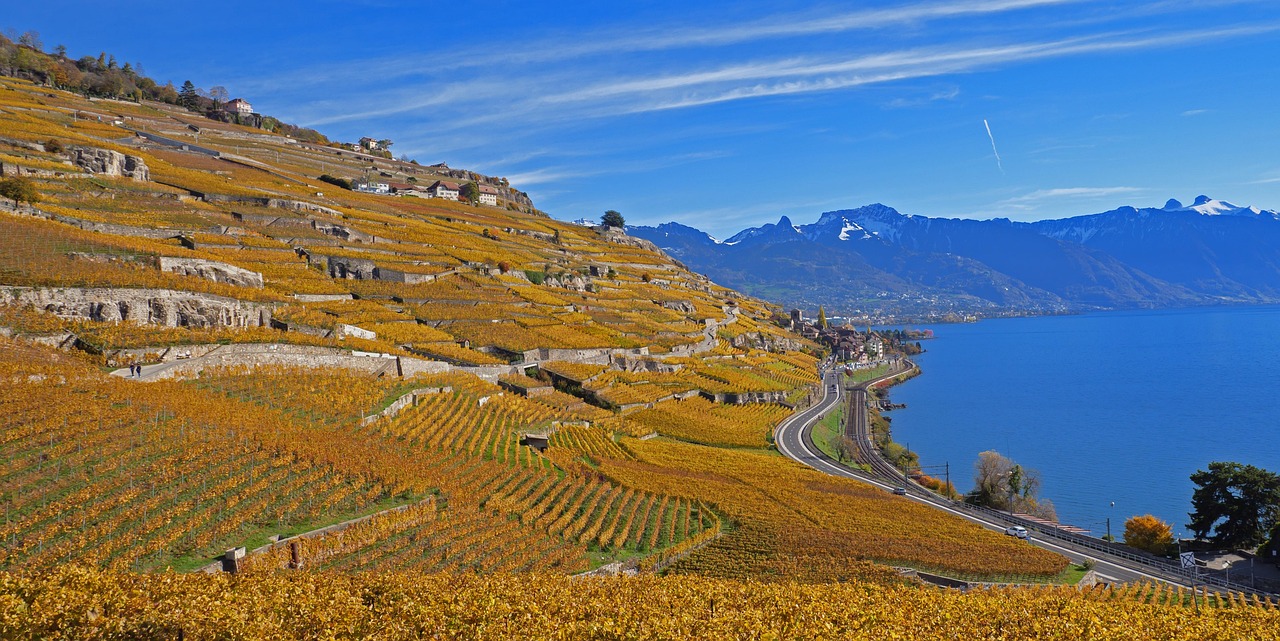
- The biggest saving in Swiss wine: buying online rather than at a supermarket — typically 15 to 25 percent less for the same bottle.
- Flaschenpost and Mövenpick Wein are the two dominant online wine retailers in Switzerland. sommelia. is the curated, AI-powered alternative — fewer bottles, chosen with care, with a sommelier to help you choose.
- Swiss wine (Valais, Vaud, Ticino) almost never leaves the country — buying it here is the only way to drink it well.
Buying wine in Switzerland is easier than the price tags suggest. The country has more wine shops per capita than most of Europe, the import system is open, and almost every village in the Valais will sell you a case at the door. The catch: supermarket wine is expensive, the shelf labels are minimal, and the same bottle can swing fifteen francs depending on where you buy it. This is the practical guide.
Where the wine actually comes from
Switzerland produces around 100 million litres of wine a year — about 35% of what the country drinks. The other 65% is imported, primarily from Italy, France, and Spain. Almost all Swiss wine stays inside the country: less than 2% is exported. If you want to drink Chasselas, Petite Arvine, Cornalin, or Humagne Rouge, you essentially have to buy them here.
Imports are unrestricted in volume but subject to a small per-litre duty (about CHF 0.60 per litre of still wine, more for sparkling) and the standard 8.1% VAT. French and Italian wine arrives at roughly the price you'd expect, with a healthy margin added somewhere along the chain.
Supermarkets: good for deals, bad for guidance
Coop, Manor, Globus, and Denner cover most of the country. Coop and Manor have the deepest selections — both stock thousands of references, including serious Swiss and imported bottles. Globus is the upscale end with the best French and Italian range. Denner (owned by Migros) is the cheap-and-cheerful channel: lots of volume brands, a few surprising bargains, almost no Swiss wine of interest. Migros itself sells very little wine, a corporate decision going back decades.
Supermarket prices run 10 to 30 percent above equivalent specialist shops for identical bottles. The regular promotions help — "Aktion" stickers are real, sometimes 30%+ off. But the shelf experience is the problem: minimal labelling, no staff who actually know wine, and thousands of bottles competing for your attention with almost no information to go on.
The three online platforms worth knowing
Switzerland's online wine market has consolidated around a handful of serious players. These three are the ones most buyers eventually land on — and they are genuinely different from each other.
Flaschenpost. The largest pure-play online wine retailer in Switzerland by volume. Enormous catalogue, aggressive pricing, fast delivery. The model is built around selection and price: if you already know exactly what you want, Flaschenpost is often the cheapest and quickest way to get it. The weakness is the same as the supermarket's weakness — you're alone with a search bar and twelve thousand results. Discovering something new is harder than it looks.
Mövenpick Wein. The established specialist chain, now part of Coop. A serious imported wine selection — strong on France and Italy, with a good Bordeaux and Burgundy range — plus a trained staff in its physical stores and a well-organised online shop. Mövenpick is the natural choice for buyers who want institutional credibility and an upmarket feel. The range skews toward classic appellations and recognisable names; expect retail pricing without much surprise.
sommelia.ch. A different proposition entirely. Where Flaschenpost and Mövenpick compete on catalogue size and brand recognition, sommelia. competes on curation and conversation. The selection is intentionally smaller — bottles chosen because they belong there, not because a distributor needed a listing. And every bottle comes with a sommelier: tell sommelia. what you're cooking, who you're drinking with, and what you want to spend, and the AI will narrow the list to the right choice — the same conversation you'd have with a good wine merchant, available at midnight, without the sales pressure.
The value sommelia. delivers isn't a lower sticker price. It's buying the right bottle the first time — which, over the course of a year, saves considerably more than a 10% discount on the wrong one.
Specialist shops: the best shelf in the building
Every Swiss city has serious independent wine shops, and they're worth knowing. Smith & Smith is a reliable national chain with well-chosen French and Italian wines and knowledgeable staff. Regional independents — Caves de Bonvin, La Cave SA, Vinothek im Felsenkeller, and dozens of one-shop operations in wine country — carry wines supermarkets won't touch and often offer the best access to top Swiss producers. Prices are higher than buying directly from a domaine but lower than supermarket pricing for equivalent quality.
What you can actually read on a Swiss wine shelf
Swiss labelling is minimal. Legal requirements are: producer, region (AOC), grape or wine name, vintage, alcohol, and volume. There is no national rating system, no "Reserva" hierarchy like Spain, and no premier-cru ladder like Burgundy.
Three signals that do the work instead:
The AOC. "Valais AOC" or "Vaud AOC" is a broad regional appellation; "Lavaux AOC" or "Dézaley Grand Cru" narrows it to a much smaller area with stricter rules. Tighter appellation generally means higher quality.
The producer. Swiss wine is a producer's game. A few names worth knowing in the Valais: Marie-Thérèse Chappaz, Domaine Cornulus, Simon Maye, Cave Caloz. In the Vaud: Henri Badoux, Louis Bovard, Pierre-Luc Leyvraz. In Ticino: Daniel Huber, Werner Stucky, Gialdi.
The cuvée name. Premium Swiss producers usually have a "selection" or named cuvée at the top of their range — for example, Chappaz's "Grain" series. The basic bottling is the calling card; the named cuvée is the serious wine.
Where the real value sits
Cutting out the supermarket and buying from a specialist — online or physical — is the easiest single saving in Swiss wine. A good online retailer typically prices 15 to 25 percent below Coop or Manor for the same bottle. A few other categories where Swiss buyers consistently get more than they pay for:
Bordeaux second wines. The "second labels" of classed-growth châteaux (Carruades de Lafite, Pavillon Rouge, Les Forts de Latour) offer 80% of the experience at 20% of the price of the grand vin. Cru Bourgeois at CHF 25 to 40 is one of the best-value red-wine categories in the world.
Côtes du Rhône and Languedoc. Serious producers (Beaucastel's Coudoulet, the village wines of Gigondas or Cairanne, the better Pic Saint-Loup) deliver Bordeaux-grade pleasure at CHF 20 to 30.
Grower Champagne. Look for "RM" on the label (Récoltant-Manipulant). Costs less than big-house Champagne; usually tastes more interesting. Most Swiss specialist shops have a growing selection.
Portuguese reds. The Douro and the Alentejo offer some of the best price-to-quality ratios in Europe. Under-represented in supermarkets; much better coverage from online specialists.
One habit worth forming
Buy by the case at least once. Even a mixed case of six or twelve bottles from a specialist — put together by someone who actually chose them — teaches you more about wine in a month than a year of single-bottle supermarket purchases. You start to notice what you prefer, what you're learning, and where you want to go next.
Do that for a year and you'll know more about your own taste than any score or generic buying guide can tell you.
Before you check out online
Compare the total order, not only the bottle price: delivery fees and minimum-order thresholds can erase a small saving. Check the promised dispatch date against the occasion, and leave a contingency day rather than relying on the fastest estimate. For a first order, a mixed selection is safer than several bottles of one untried wine.
Read the retailer's policy for corked or damaged bottles before buying, because preference returns and fault claims are not the same thing. In warm weather, also check how the merchant protects wine in transit or ask for a cooler delivery window. These details matter more than another percentage point of discount.
Tell our sommelier what you're looking for — price, occasion, what you're eating — and she'll find you the right bottle from our curated selection.
Questions we get asked
What is the difference between Flaschenpost, Mövenpick Wein, and sommelia.?
Flaschenpost is the largest online wine retailer in Switzerland — enormous catalogue, competitive pricing, fast delivery. Best if you already know exactly what you want. Mövenpick Wein is the specialist chain (now part of Coop) with a strong imported wine range and institutional credibility. sommelia. is the curated alternative: fewer bottles chosen with intention, plus an AI sommelier that helps you find the right one based on what you're cooking, who you're drinking with, and your budget.
Is wine really more expensive in Switzerland than in France or Italy?
Yes — typically 30 to 60% more for the same imported bottle, and Swiss wine itself is expensive by international standards. The reasons are high land and labour costs for Swiss production, import duties, and a market of affluent buyers who are used to paying more. The best way to mitigate it is to buy from an online specialist rather than a supermarket.
Can I import wine from France or Italy myself?
Yes, within limits. Each adult can bring 5 litres of wine into Switzerland duty-free from abroad; above that, you pay duty and VAT at the border. Ordering online from a French or Italian shop and shipping to Switzerland is technically possible, but the shipping cost and customs paperwork usually erase the saving.
How do I know whether a Swiss wine is good without tasting it?
Three signals in order: the producer (serious Valais and Vaud producers are well documented online), the appellation (tighter is usually better — Dézaley over Lavaux, Fully over Valais), and the position in the producer's range (the named cuvée at the top tells you more than the basic bottling). Critic scores exist but are less developed for Swiss wine than for Bordeaux or Burgundy.