What Wine Goes With Cheese Fondue
A pot of bubbling cheese asks one thing of the wine: cut through it. Anything heavier and the evening collapses by the second forkful.
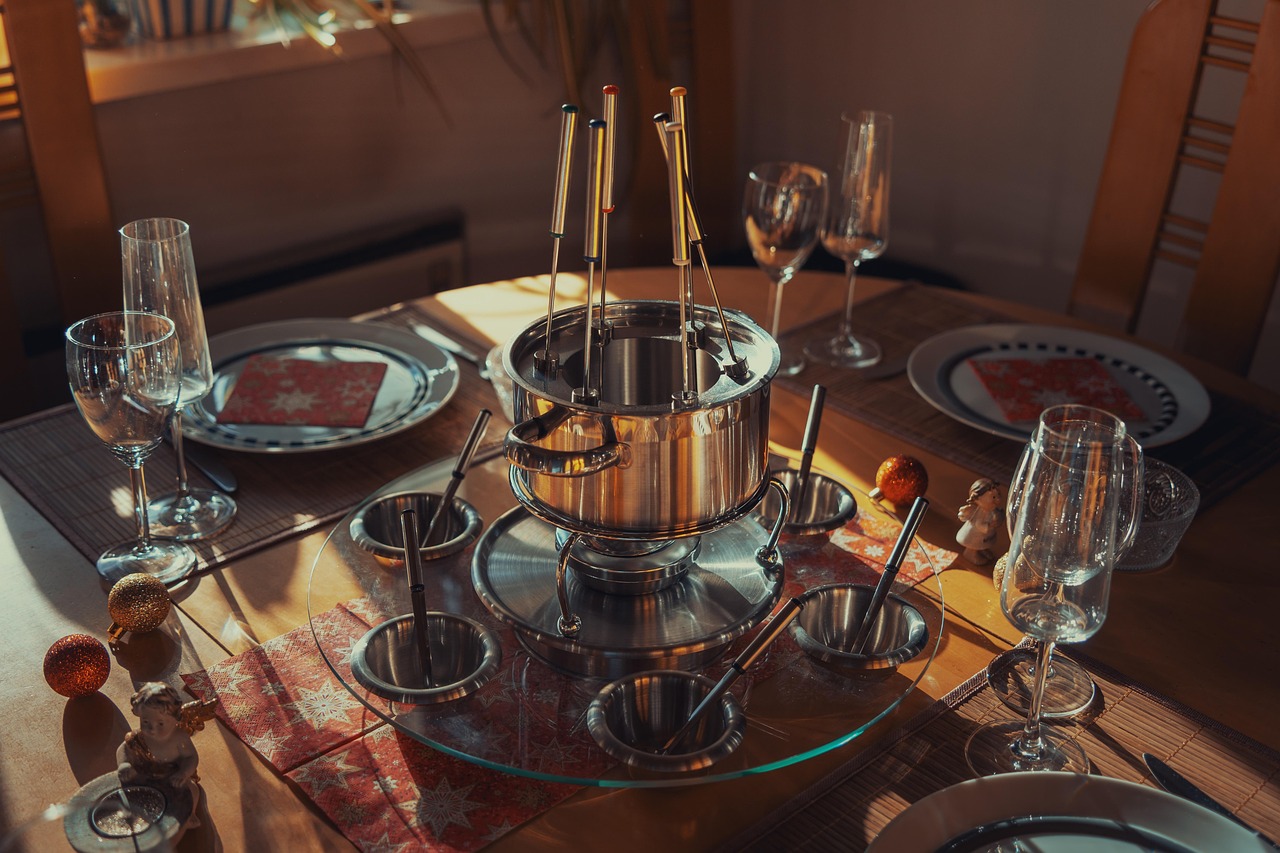
- The Swiss default — a dry Fendant (Chasselas) from the Valais — remains the best answer after a hundred years of testing.
- Reds rarely work. Tannin and melted cheese collide; even a light Pinot Noir is a compromise at best.
- The tradition of also drinking warm black tea or a small kirsch is genuine and helpful — both cut the fat.
- Serve the wine cold (8 °C), pour generously, and keep a jug of mineral water on the table.
Fondue is a more demanding pairing than raclette. The cheese is hotter, wetter, and more uniformly rich — you're not pacing yourself between potatoes and pickles, you're dipping bread into molten cheese for an hour. The wine has to be precise. Get it right and the meal feels light; get it wrong and you're full before the second round.
The answer Switzerland already worked out
A dry Fendant from the Valais. Chasselas grown in the Rhône valley, low in alcohol (typically 12 to 12.5%), bright in acidity, almost transparent in flavour. It does the one thing fondue requires: it refreshes the palate between dips without adding weight. A century of Swiss families have landed on this answer; arguing with it is mostly a way to make your evening harder.
Look for producers from the central Valais — Sion, Conthey, Vétroz, Fully. A simple village-level Fendant from Provins, Cave Saint-Pierre, or a local cooperative does the job. If you want to spend more, an old-vine Fendant from Marie-Thérèse Chappaz or Domaine Cornulus brings a little more chalk and a little more length, but the difference is felt in the first ten minutes — not the last.
The two acceptable detours
Petite Arvine, dry. Saltier and more vivid than Chasselas, with a flicker of grapefruit. The salt-on-salt match is surprisingly good. Slightly more expensive, slightly more memorable. Best with a fondue moitié-moitié (half Gruyère, half Vacherin Fribourgeois) where the Vacherin gives a richer base.
A bone-dry Riesling from Alsace or Germany. The acidity is right; the petrol-tinged minerality of a good Riesling cuts the fat at least as well as Chasselas. Avoid anything sweet — even a touch of residual sugar collides with the cheese.
What about red wine?
Most reds lose to fondue. Tannin grips the fat from the cheese and the inside of your mouth dries out by the third dip. That includes Cabernet, Bordeaux, Syrah, Chianti, and any reserve-style oaked red. Even a well-made Burgundy is a polite struggle.
The one red that occasionally works is a chilled, light Swiss Pinot Noir — pale, low tannin, served around 14 °C. Or a Dôle, the Valais Pinot/Gamay blend. Both are honest compromises rather than upgrades. If half your table won't drink white, pour one of these. If everyone will, stay on Fendant.
The tea, the kirsch, and the cold-water myth
Tradition says cold water with fondue is dangerous — that the cold liquid will turn the cheese into a stomach lump. This is folklore, not medicine. There's no evidence it causes anything beyond mild discomfort, and most people drink water with fondue without incident. Have water on the table.
The other two traditions hold up better. Warm black tea — a small cup alongside the wine — genuinely helps digestion; the warmth and the tannin cut through the fat in a way cold liquids can't. And a small glass of kirsch halfway through the pot ("le coup du milieu") is more than a ritual: the high-proof eau-de-vie clears the palate and resets the appetite. A teaspoon, not a tumbler.
Quantity and service
Fondue is a long meal disguised as a single course. Plan one bottle per two adults if you have a slow evening ahead, one bottle per three if guests will be eating quickly. Serve at 8 °C — fridge for two hours. Refresh the bottle in an ice bucket on the table; warm Chasselas tastes flabby almost immediately.
Universal white glasses are fine. Bread cubes should be slightly stale (yesterday's loaf, lightly toasted) so they cling to the fork. A small bowl of cornichons and pickled onions on the side, even though the wine is doing most of the cutting.
What to avoid
Big oaky Chardonnay — the oak fights the cheese and adds richness where you need less. Sweet wines of any kind. Sparkling wine after the apéro (the bubbles dull and the wine tastes flat by the second glass). And anything above 13.5% alcohol — a fondue with a 14.5% red is the express route to needing a long walk and an early night.
For the right white or sparkling bottle for fondue night, choose wine for the dinner — every recommendation is based on the dish, group, and budget.
Fondue tonight? Tell our sommelier what kind — pure Gruyère, moitié-moitié, or Vacherin — and she'll pick the bottle to pour.
Questions we get asked
Can I serve a non-Swiss white instead?
Yes — but pick the right shape. A dry Muscadet from the Loire, an Alsatian Pinot Blanc, or a Grüner Veltliner from Austria all share Chasselas's quiet, dry, high-acid profile. Avoid Sauvignon Blanc (too aromatic, clashes with the cheese) and oaked Chardonnay.
What if I'm cooking a fondue moitié-moitié vs. a pure Gruyère?
Moitié-moitié (half Gruyère, half Vacherin Fribourgeois) is richer and slightly funkier — Petite Arvine is a particularly good match because the salinity matches the Vacherin. Pure Gruyère is leaner; Fendant or a dry Riesling handles it perfectly.
Is fondue Chinoise (meat fondue) the same pairing?
No — and that's a separate question. Fondue Chinoise (thin slices of beef cooked in broth) is closer to a meat dish than a cheese dish, so a light red wine works well: a chilled Swiss Pinot Noir, a Beaujolais, or a young Dôle. The dipping sauces matter more than the broth.
Champagne with fondue — yes or no?
Honestly, no. Champagne at the start of the evening (as the apéro) is wonderful; Champagne all the way through dinner sounds glamorous but the bubbles go limp against the melted cheese and you stop tasting either. Switch to Fendant once the fondue arrives.