Wine Grapes Explained: Key Varieties
There are thousands of wine grape varieties, but a handful account for most of what you will ever drink. Understanding them is the fastest shortcut to understanding wine.
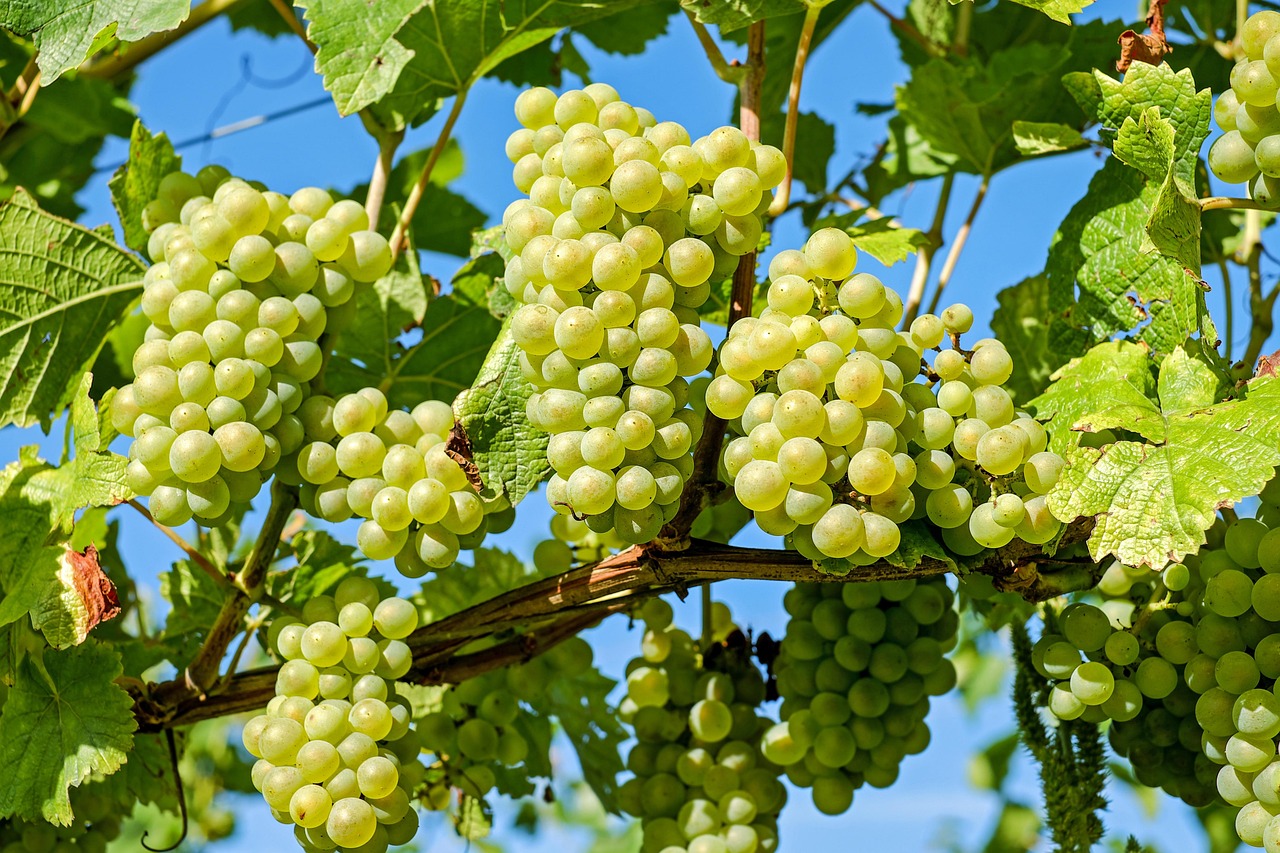
- The same grape variety tastes dramatically different depending on where it is grown — climate, soil, and winemaking all reshape its character. Pinot Noir from Burgundy and Pinot Noir from New Zealand are the same grape and a completely different experience.
- Red varieties to know first: Cabernet Sauvignon, Merlot, Pinot Noir, Syrah/Shiraz, Nebbiolo, and Sangiovese. These six cover the majority of the world's serious red wine.
- White varieties to know first: Chardonnay, Sauvignon Blanc, Riesling, and Pinot Grigio/Gris. Add Chenin Blanc and Gewurztraminer once these four are familiar.
- Grape variety is one of the most useful ways to predict a wine's style — but it is not the only variable. The same variety grown in Burgundy, Oregon, and New Zealand will taste different enough to seem like different wines.
Wine is made from grapes. This seems obvious, but the grape variety — the specific cultivated strain of Vitis vinifera from which a wine is made — is one of the most powerful predictors of what a wine will taste like. Understanding the key varieties is not about memorising a list; it is about building a mental map that makes every wine label, every restaurant wine list, and every bottle shop visit more legible.
There are over 1,300 documented wine grape varieties in cultivation globally. In practice, about a dozen dominate commercial production. Knowing these well is sufficient to navigate the vast majority of what you will encounter.
How grape variety shapes wine
Each grape variety has characteristic tendencies: a natural level of acidity, a typical range of tannin (in red grapes), a set of aromatic compounds that produce its signature scents, and a relationship with climate that shapes how those characteristics express.
Riesling, for example, is always high in acidity and aromatic, producing wines that range from bone-dry to intensely sweet depending on when the grapes are picked — but always with that foundational acidity and the distinctive petrol/lime character that makes Riesling recognisable. Cabernet Sauvignon is always structured, with firm tannins and a blackcurrant- and-cedar core — but that structure plays out very differently in the wet Atlantic climate of Bordeaux versus the hot sun of Napa Valley.
The key insight: grape variety sets the range of possibilities; climate, soil, and winemaking determine where within that range the wine lands.
The essential red varieties
Cabernet Sauvignon is the world's most widely planted red grape and the backbone of Bordeaux, Napa Valley, and much of the serious red wine produced globally. It produces wines with firm tannins, deep colour, and a core of blackcurrant, cedar, and dark herbs. It ages well and improves with ten or more years in bottle.
Merlot is Cabernet Sauvignon's softer sibling — rounder tannins, more plummy fruit, and an earlier approachability. It dominates the right bank of Bordeaux (Pomerol, Saint-Émilion) and is one of the most widely planted varieties globally. Ticino, in southern Switzerland, produces excellent Merlot that is often underappreciated.
Pinot Noir is one of the most complex and site-sensitive grapes in existence. Thin-skinned, early-ripening, and demanding, it produces wines of extraordinary elegance at its best — red fruit, earth, and silk texture — but rewards the right climate and careful viticulture. Its home is Burgundy; significant expressions come from Oregon, New Zealand's Central Otago, and Germany.
Syrah / Shiraz is the same grape under two names: Syrah in France and most of Europe, Shiraz in Australia and South Africa. Northern Rhône Syrah (Hermitage, Côte-Rôtie) is powerful, dark, and age-worthy, with black pepper and smoked meat character. Australian Shiraz tends to be riper, fuller, and more immediately hedonistic.
Nebbiolo is Piedmont's great red grape — the variety behind Barolo and Barbaresco. Pale in colour but powerful in tannin and acidity, with tar, roses, and dried cherry character. Among the most age-worthy grapes in the world: serious Barolo needs a decade of patience.
Sangiovese is the heart of Tuscan wine, the grape behind Chianti, Brunello di Montalcino, and Vino Nobile di Montepulciano. High acidity, firm tannins, red cherry and earthy tobacco character. Italy's most widely planted variety.
The essential white varieties
Chardonnay is the world's most widely planted white grape and the most stylistically variable. Without winemaking intervention, it is relatively neutral. With oak aging and malolactic fermentation, it becomes rich, creamy, and vanilla-inflected. With minimal intervention, it is crisp and mineral. Burgundy, Champagne, Chablis, and a thousand New World expressions all use Chardonnay, with dramatically different results.
Sauvignon Blanc is aromatic, sharp, and unmistakable — green herbs, gooseberry, and a cutting acidity that makes it one of the best food wines available. Loire Valley (Sancerre, Pouilly-Fumé) is the classic expression; New Zealand's Marlborough region made it famous globally with a more tropical, intensely fruity style.
Riesling produces the world's most age-worthy white wines from its heartland in Germany's Mosel and Rhine valleys, as well as Alsace and Austria. High acidity, intense fruit (lime, peach, apricot), and a distinctive mineral / petrol character that develops with age. Can be bone-dry or lusciously sweet; the style is indicated on the label (Trocken, Spätlese, Auslese).
Pinot Grigio / Pinot Gris is the same grape in two styles. Italian Pinot Grigio is typically light, crisp, and neutral — designed for everyday drinking. Alsatian Pinot Gris is richer, more aromatic, and often with a touch of residual sweetness. The grape is the same; the philosophy is different.
Switzerland's signature varieties
Chasselas is Switzerland's most planted white grape, producing the wines of Lavaux, Vaud, and the Valais. Light, mineral, and subtly fizzy in its best expressions, it is one of the most food-friendly whites produced anywhere and remains almost entirely unknown outside Switzerland.
Petite Arvine is the Valais's most distinctive indigenous variety — a white grape producing wines of startling intensity, with grapefruit, salt, and alpine mineral character. One of Switzerland's most distinctive wine contributions.
Tell the sommelier which variety interests you — get a recommendation that shows it at its best.
Questions we get asked
What are the most important red wine grape varieties?
The six red varieties that account for most of the world's serious red wine: Cabernet Sauvignon (Bordeaux, Napa), Merlot (right-bank Bordeaux), Pinot Noir (Burgundy, Oregon, New Zealand), Syrah/Shiraz (Rhône, Australia), Nebbiolo (Barolo, Barbaresco), and Sangiovese (Chianti, Brunello). Understanding these six covers the majority of fine red wine you'll encounter.
What are the most important white wine grape varieties?
The four essential whites: Chardonnay (Burgundy, Champagne, global), Sauvignon Blanc (Sancerre, New Zealand), Riesling (Germany, Alsace), and Pinot Grigio/Gris (Italy, Alsace). Once familiar, add Chenin Blanc (Loire), Gewurztraminer (Alsace), and Viognier (northern Rhône) for a more complete picture.
Does the grape variety determine the wine's flavour?
Significantly, but not entirely. Each grape has characteristic tendencies — acidity level, tannin structure, aromatic compounds — that set a range. Within that range, climate, soil, viticulture, and winemaking determine where the wine lands. A cool-climate Syrah and a warm-climate Shiraz are the same grape in different expressions — distinctive enough to seem like different varieties.
What are Switzerland's most important indigenous grape varieties?
Chasselas is Switzerland's most planted white, producing the defining wines of Lavaux and the Vaud. Petite Arvine from the Valais produces intensely aromatic, mineral whites with a distinctive saline finish. Cornalin and Humagne Rouge are the most characterful indigenous reds. Swiss Pinot Noir and Merlot from Ticino are the most important internationally known varieties grown in Switzerland.