Bordeaux Wine, Explained Simply
Bordeaux is the world's benchmark red — structured, layered, built for the long game. Here's what the map, the labels, and the classifications actually mean.
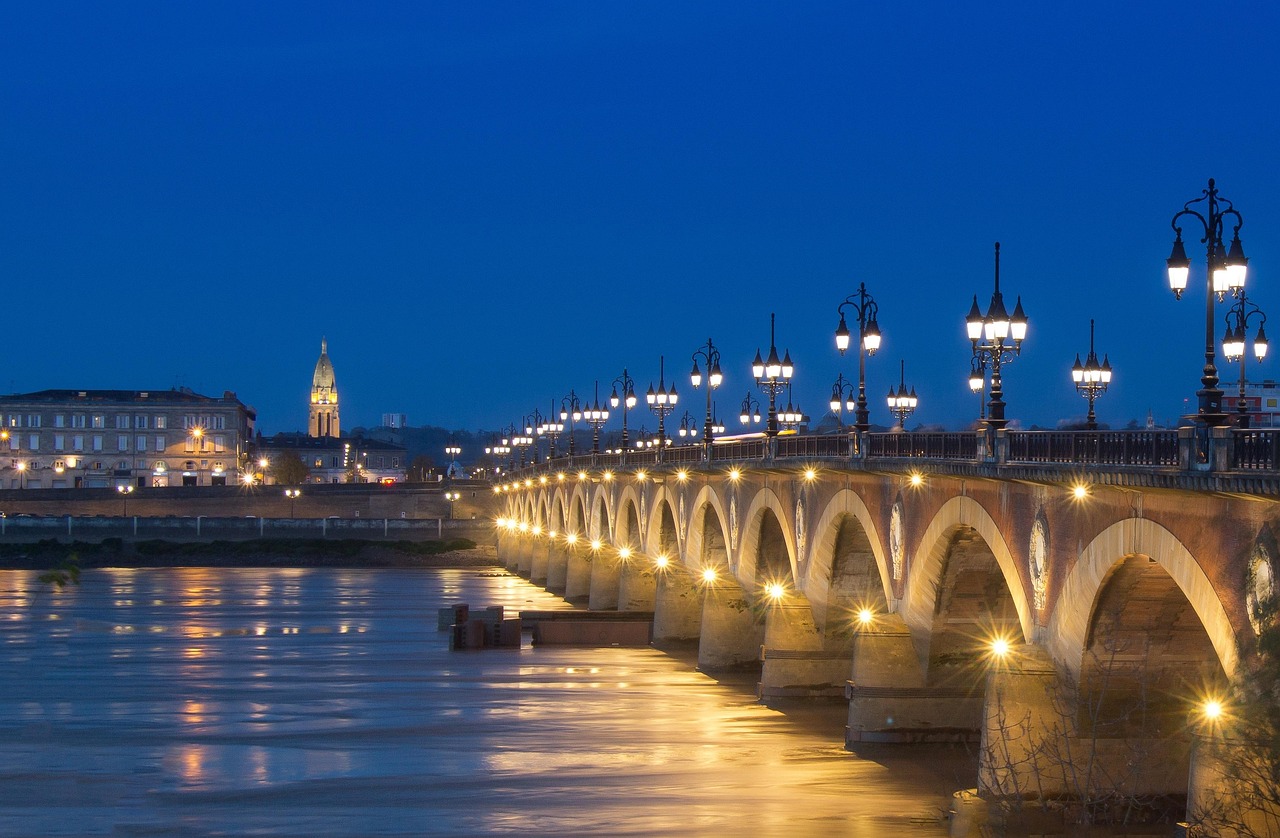
- Left Bank (Médoc, Graves) is Cabernet Sauvignon-dominant — firmer tannin, darker fruit, built to age decades. Right Bank (Pomerol, Saint-Émilion) is Merlot-dominant — rounder, more approachable earlier.
- The 1855 Classification ranks châteaux from First to Fifth Growth. It's useful context, but Cru Bourgeois and unclassified estates regularly deliver more value per franc than mid-table classified growths.
- Most serious Bordeaux needs at least 8–12 years in bottle before it opens up. The best vintages from top estates can age for 30–40 years and improve throughout.
- Second wines of classed-growth châteaux — Carruades de Lafite, Pavillon Rouge, Les Forts de Latour — give 70–80% of the grand vin's character at 15–25% of the price.
Bordeaux is not the most romantic wine in the world. It is the most benchmarked — the wine that shaped what serious red wine looks like across five continents, the standard by which winemakers in California, Australia, Chile, and South Africa have measured themselves for a century. Understanding Bordeaux means understanding the grammar of fine red wine. After that, everything else becomes easier to read.
Where Bordeaux actually is
The Bordeaux wine region sits in the southwest of France, centred on the city of Bordeaux and the Gironde estuary where the Dordogne and Garonne rivers meet. The climate is Atlantic — mild, relatively wet, variable from year to year. That variability is why vintages matter so much in Bordeaux: a cold, wet September (2013, 2017 in places) produces very different wine from a warm, dry one (2016, 2019, 2022).
The two banks — and why it matters
The Gironde estuary divides Bordeaux into two distinct winemaking zones. On the Left Bank(the Médoc and Graves), the dominant grape is Cabernet Sauvignon — dark-fruited, tannic, high in acidity, slow to open. Left Bank wines are firmer in youth, need more time, and at their best develop extraordinary complexity over 15–30 years. The key appellations are Pauillac (home of Latour, Lafite, Mouton), Saint-Julien (Lagrange, Léoville-Barton), Margaux, and Saint-Estèphe.
On the Right Bank (Pomerol and Saint-Émilion), Merlot takes the lead. The soils here — clay-rich, cooler — suit Merlot's earlier ripening cycle. Right Bank wines are softer, rounder, and more approachable younger. Pomerol has no official classification (Pétrus, Le Pin, and Lafleur are simply priced by reputation); Saint-Émilion has its own classification, revised every decade.
The grape varieties
Bordeaux blends are always a combination. On the Left Bank, Cabernet Sauvignon (50–80%) is supported by Merlot, Cabernet Franc, Petit Verdot, and occasionally Malbec and Carménère. On the Right Bank, Merlot (60–90%) is typically supported by Cabernet Franc and Cabernet Sauvignon. The precise blend changes with each vintage — winemakers work with whatever ripened best that year.
White Bordeaux is made from Sauvignon Blanc and Sémillon, dry (Pessac-Léognan makes the most serious examples) or sweet. The sweet whites from Sauternes and Barsac — where Sémillon is attacked by noble rot — are among the world's greatest dessert wines.
The classification explained
In 1855, Napoleon III ordered a ranking of the top Médoc châteaux for the Paris World Exhibition. Sixty-one châteaux were classified as First through Fifth Growths, based entirely on the prices their wines commanded at the time. That classification has been revised only once (to add Mouton Rothschild to the First Growths in 1973) and otherwise remains unchanged. It is both a useful guide and a significant distortion — some Fifth Growths now outperform Third Growths; some classified estates have declined.
The practical takeaway: the classification identifies reliable producers, but it doesn't tell you which vintage to buy or whether you're getting fair value. Use it as a starting point, not a guarantee.
Cru Bourgeois and the unclassified estates
Below the classified growths sits a category of around 250 estates called Cru Bourgeois. The best of these — Sociando-Mallet, Phélan Ségur, La Tour de Mons, d'Angludet — produce wines that rival many classified growths at a fraction of the price. This is where Bordeaux delivers its best value for everyday drinking. A serious Cru Bourgeois from a good vintage at CHF 25–40 will drink better than many a Fifth Growth at CHF 70.
Drinking windows and vintages
Bordeaux is not a wine to drink young, unless you have no choice. A classed-growth Médoc from a ripe vintage opened at five years old will be tight, tannic, and essentially closed. The same bottle at twelve or fifteen years old will have integrated tannin, developed secondary flavours (cedar, tobacco, dried fruit, earth), and be one of the most pleasurable drinking experiences in wine. A Cru Bourgeois or right-bank Merlot-dominant wine is more forgiving — drinkable at 6–10 years.
The standout vintages of the last two decades: 2005, 2009, 2010, 2016, 2019, 2022. Of these, 2016 and 2019 are the ones to watch — they're starting to open now and will reward patience.
What to buy first
If you're new to Bordeaux: start with a Cru Bourgeois or a second wine. Sociando-Mallet is a reliable overperformer in Saint-Estèphe; Château Lagrange in Saint-Julien punches well above its third-growth classification. For second wines, Carruades de Lafite, the Réserve de la Comtesse (Pichon-Comtesse), and La Dame de Montrose all give you the house style at an accessible price. Look for a wine at 8–12 years old.
To explore Bordeaux second wines and Cru Bourgeois at prices that reflect genuine quality, explore Bordeaux second wines from a curated selection — tell the sommelier your budget and the occasion.
Looking for a Bordeaux to open this year? Tell our sommelier your budget and whether you prefer Left Bank structure or Right Bank roundness.
Questions we get asked
Is all Bordeaux red?
No. About 88% of Bordeaux production is red (or rosé), but the region also makes some of France's greatest dry whites from Sauvignon Blanc and Sémillon in Pessac-Léognan and the Graves, as well as the famous sweet wines of Sauternes and Barsac.
How do I know which vintage to buy?
For current drinking: 2014 is widely open now and underrated. 2015 is round and generous. 2016 is the best vintage of the decade — starting to show but still evolving. For older bottles: 2009 and 2010 are at or near their peak. Avoid 2013 for anything serious. 2017 and 2018 are variable — buy producer-by-producer rather than vintage-wide.
Do I need to decant Bordeaux?
Young Bordeaux (under 10 years, especially Left Bank) benefits from 1–2 hours of decanting. It helps open the tannin and release the aromatics. Older Bordeaux (15 years+) should be decanted carefully — slowly, over a candle or bright light to catch any sediment — but only for 30–45 minutes. Very old bottles can fade quickly once opened; don't leave them in a decanter overnight.
What's a good Bordeaux to start with under CHF 50?
A Cru Bourgeois from a serious estate is the answer. Look for Sociando-Mallet, Phélan Ségur, d'Angludet, or Château Lagrange's second wine (Les Fiefs de Lagrange). A second wine of a classed growth — Réserve de la Comtesse or La Dame de Montrose — is another reliable entry point. Aim for a wine with at least 8 years of age on it.