Sparkling Wine Beyond Champagne
Champagne is the reference point for sparkling wine — but Crémant, Prosecco, Cava, and a dozen other styles offer genuine alternatives at a fraction of the price. Here is how they differ.
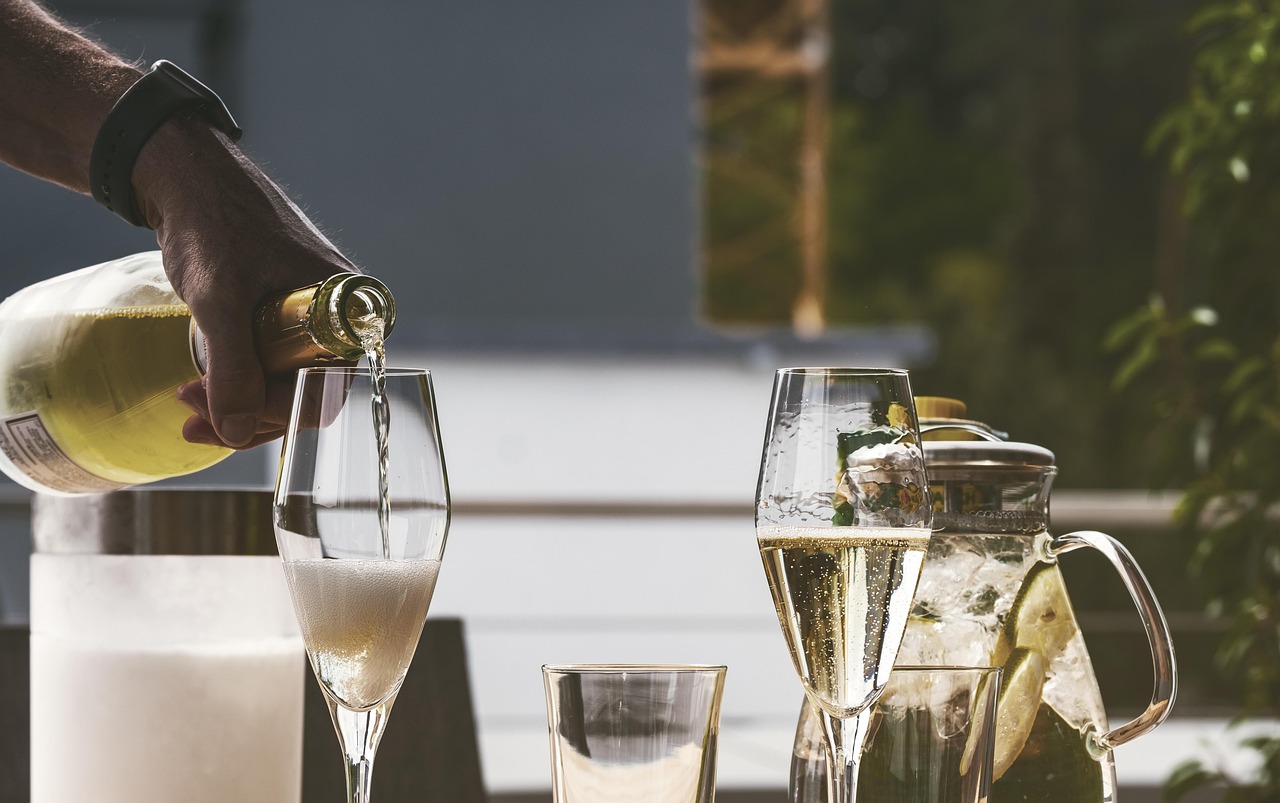
- The key distinction in sparkling wine is the production method: traditional method (second fermentation in bottle) produces finer, more complex bubbles and richer character. Tank method (Charmat) produces fresher, fruitier wine with less complexity — suited to aromatic varieties like Glera (Prosecco).
- Crémant is France's answer to affordable Champagne-quality sparkling wine: made by the traditional method in Alsace, Burgundy, Loire, and other regions, often at half the price of Champagne with comparable quality.
- Cava is Spain's traditional-method sparkling wine, made primarily from indigenous varieties (Macabeo, Xarel·lo, Parellada) in Catalonia. At CHF 15–25, quality Cava is among the world's best sparkling wine value.
- Prosecco is made by the tank method from the Glera grape in northeast Italy. The fresh, light, and slightly floral style is not meant to be a Champagne substitute — it is a different drink, and at its best it is excellent on its own terms.
Champagne's dominance of the sparkling wine conversation is understandable — it was the category's originator and remains its undisputed prestige benchmark. But it has also had an unfortunate side effect: it has encouraged buyers to evaluate all other sparkling wine as "not quite Champagne" rather than as distinct styles with their own character and best uses.
Crémant, Prosecco, Cava, English sparkling wine, Pétillant Naturel, and a dozen other styles are not failed attempts at Champagne. They are different wines, made from different grapes, by different methods, and suited to different occasions. Understanding the differences makes the category significantly more useful.
The method defines the wine
Before comparing specific sparkling wines, the key distinction is production method — it shapes the character of the wine more fundamentally than the grape or the region.
Traditional method (Méthode Champenoise / Méthode Traditionnelle):A base wine is bottled with a small amount of sugar and yeast solution. A second fermentation occurs inside the sealed bottle, producing CO₂ that dissolves into the wine under pressure, creating fine, persistent bubbles. The dead yeast cells (lees) remain in contact with the wine for a minimum aging period — twelve months for non-vintage Champagne, fifteen months for Crémant, longer for prestige cuvées — contributing the characteristic bready, yeasty, brioche complexity. This method is labour-intensive and significantly more expensive than the alternatives.
Tank method (Charmat / Cuve Close): The secondary fermentation takes place in a large pressurised tank rather than in individual bottles. The process is faster and less expensive; the wine spends no meaningful time on lees. The result is fresher, more fruit-forward, with less complexity and larger, more vigorous bubbles. Well-suited to aromatic grapes that would lose their fresh varietal character in a prolonged traditional-method process.
Champagne
Champagne is the traditional-method sparkling wine produced in the Champagne appellation northeast of Paris, primarily from Chardonnay, Pinot Noir, and Pinot Meunier. The appellation's combination of chalk soils, cool climate, and centuries of accumulated winemaking knowledge produces sparkling wine with extraordinary finesse, complexity, and aging potential.
Non-vintage Champagne (NV) — the blending of multiple vintages to achieve a consistent house style — is the commercial backbone. Vintage Champagne (produced only in declared years) ages magnificently for ten to thirty years. Prestige cuvées (Dom Pérignon, Krug Grande Cuvée, Salon) represent the pinnacle of the category.
Crémant
Crémant is traditional-method sparkling wine produced in French appellations outside Champagne: Crémant d'Alsace (primarily Pinot Blanc and Auxerrois), Crémant de Bourgogne (Chardonnay and Pinot Noir), Crémant de Loire (Chenin Blanc dominant), and several others. Regulations require minimum lees aging of twelve months — comparable to non-vintage Champagne — and the wines are made by the same method with similar care.
The quality of the best Crémants is genuinely comparable to non-vintage Champagne; the price, typically CHF 20–35, is not. Crémant d'Alsace and Crémant de Bourgogne are the two most widely available and most reliable; Crémant de Loire from a quality producer can be extraordinary.
Cava
Cava is Spain's traditional-method sparkling wine, produced primarily in Catalonia's Penedès region from local varieties: Macabeo, Xarel·lo, and Parellada. The wines are made by the same method as Champagne, with a minimum aging of nine months for non-vintage and fifteen for Reserva.
Entry-level Cava at CHF 12–18 can be simple and commercial. Reserva and Gran Reserva Cava (thirty months or more on lees) from quality producers — Gramona, Recaredo, Raventós i Blanc — are wines of real complexity at CHF 25–45, representing some of the world's best sparkling wine value.
Prosecco
Prosecco, from the Veneto and Friuli in northeast Italy, is made by the tank method from the Glera grape. The resulting wine is fresh, light, and gently aromatic — with apple, white peach, and floral notes — without the brioche and toasty complexity of traditional-method wines. This is not a flaw; it is the design. Prosecco's role is refreshment and conviviality, not complexity.
The best Prosecco comes from Conegliano Valdobbiadene DOCG — the historic hill town area where the Glera grape produces its most aromatic expressions. Single-vineyard Prosecco Superiore di Cartizze, from a specific 107-hectare hill, is the appellation's most prestigious wine.
English sparkling wine
England's chalk soils in Kent, Sussex, and Hampshire are geologically similar to Champagne's — and the cool, marginal climate produces base wines of the high acidity needed for great traditional-method sparkling wine. Nyetimber, Ridgeview, and Chapel Down have demonstrated that English sparkling wine can compete directly with Champagne on quality. It remains expensive (CHF 50–80 typically) but has genuine credentials.
Tell the sommelier your occasion and budget — get a sparkling wine recommendation.
Questions we get asked
What is Crémant and is it as good as Champagne?
Crémant is traditional-method sparkling wine produced in French appellations outside Champagne: Crémant d'Alsace, Crémant de Bourgogne, Crémant de Loire, and others. Same method as Champagne, different region and grapes. At CHF 20–35, a quality Crémant d'Alsace or de Bourgogne offers remarkable value — not the same as Champagne, but genuinely excellent sparkling wine.
What is the difference between Prosecco and Champagne?
Champagne is made by the traditional method — the bubbles develop inside each individual bottle during a second fermentation, giving complexity and fine persistent bubbles. Prosecco uses the tank method — the second fermentation happens in a pressurised tank, producing simpler, fruitier wine with larger, less persistent bubbles. The quality difference is real and significant.
Is Cava good quality?
Yes, particularly at the Reserva and Gran Reserva level. Entry-level Cava can be simple; Gran Reserva Cava aged 30+ months offers real complexity at CHF 20–30. The key is buying from serious producers — Recaredo, Gramona, and Raventós i Blanc make traditional-method wines that rival Champagne in character.
What is English sparkling wine?
England's chalk soils in Kent, Sussex, and Hampshire are geologically similar to Champagne's, and the cool climate produces the same high-acidity base wine that makes great traditional-method sparkling. Nyetimber, Ridgeview, and Chapel Down are the best-known producers. Quality is consistently high; prices are still above Champagne equivalents but falling.