How White Wine Is Made
White wine is defined by what's excluded — specifically, the grape skins. How a winemaker handles the juice, the fermentation vessel, and the oak tells you almost everything about what's in the glass.
- White wine is made with minimal or no skin contact — the juice is separated from the skins early, which is why it has almost no tannin.
- Fermentation temperature is the key variable: cooler fermentation preserves aromatic freshness; warmer fermentation builds texture and complexity.
- Oak ageing versus no oak is the biggest stylistic divide in white winemaking: unoaked whites are fresh and fruit-forward; oaked whites are richer with vanilla and toast notes.
- Malolactic fermentation (converting sharp malic acid to soft lactic acid) is optional for whites — it creates the 'buttery' quality in some Chardonnays and is blocked in wines where freshness is the goal.
White wine is simpler in structure than red wine — no skin contact, no tannin extraction, usually a straightforward path from grape to glass. But simpler structure doesn't mean simpler flavour, and the decisions a winemaker makes at each stage have a profound effect on the character of the finished wine. Two Chardonnays made from the same vineyard can taste almost nothing alike, depending on temperature control, yeast choice, and oak.
Harvest
White grapes are often harvested slightly earlier than red grapes, when the acidity is higher and the sugars haven't fully peaked. For fresh, crisp styles (Muscadet, Vinho Verde, Riesling, Sauvignon Blanc) this is intentional: the winemaker is preserving the bright, fresh quality of the fruit. For richer styles (oaked Chardonnay, Viognier), the grapes may be picked at full ripeness.
Some white grapes — Riesling, Chenin Blanc, Sémillon — can be harvested late (late harvest or even botrytised, affected by the "noble rot" fungus Botrytis cinerea) to concentrate sugar and produce sweet wines. Sauternes and German Auslese, Beerenauslese, and Trockenbeerenauslese are made this way.
Pressing and skin contact
After harvest, white grapes are pressed — the juice separated from the skins quickly. This is the defining difference from red wine. The speed and gentleness of pressing matters:
Gentle whole-bunch pressing (pressing whole bunches rather than crushing first) gives the palest, freshest, most delicate juice — the method used in Champagne and most fine white wine production.
Brief skin contact — leaving the juice in contact with the skins for a few hours before pressing — is used by some producers to extract more aromatic compounds and phenolics. This can add texture and complexity but must be controlled carefully; extended skin contact produces orange wine.
Settling and clarification
After pressing, the juice contains grape solids (bits of skin, seeds, pulp) — collectively called lees in French. The juice is settled in a cold tank, allowing the solids to fall to the bottom, and then the clear juice is racked off into the fermentation vessel. Alternatively, it may be fermented with some of the coarser solids for more texture and yeast character.
Fermentation
White wine fermentation typically takes place at lower temperatures than red (10–18°C versus 20–28°C for reds). The reason: cooler temperatures preserve volatile aromatic compounds — the esters and thiols that give Sauvignon Blanc its grapefruit character, or Riesling its floral lift. Ferment too warm and those aromas escape into the air rather than staying in the wine.
Vessel choice is significant:
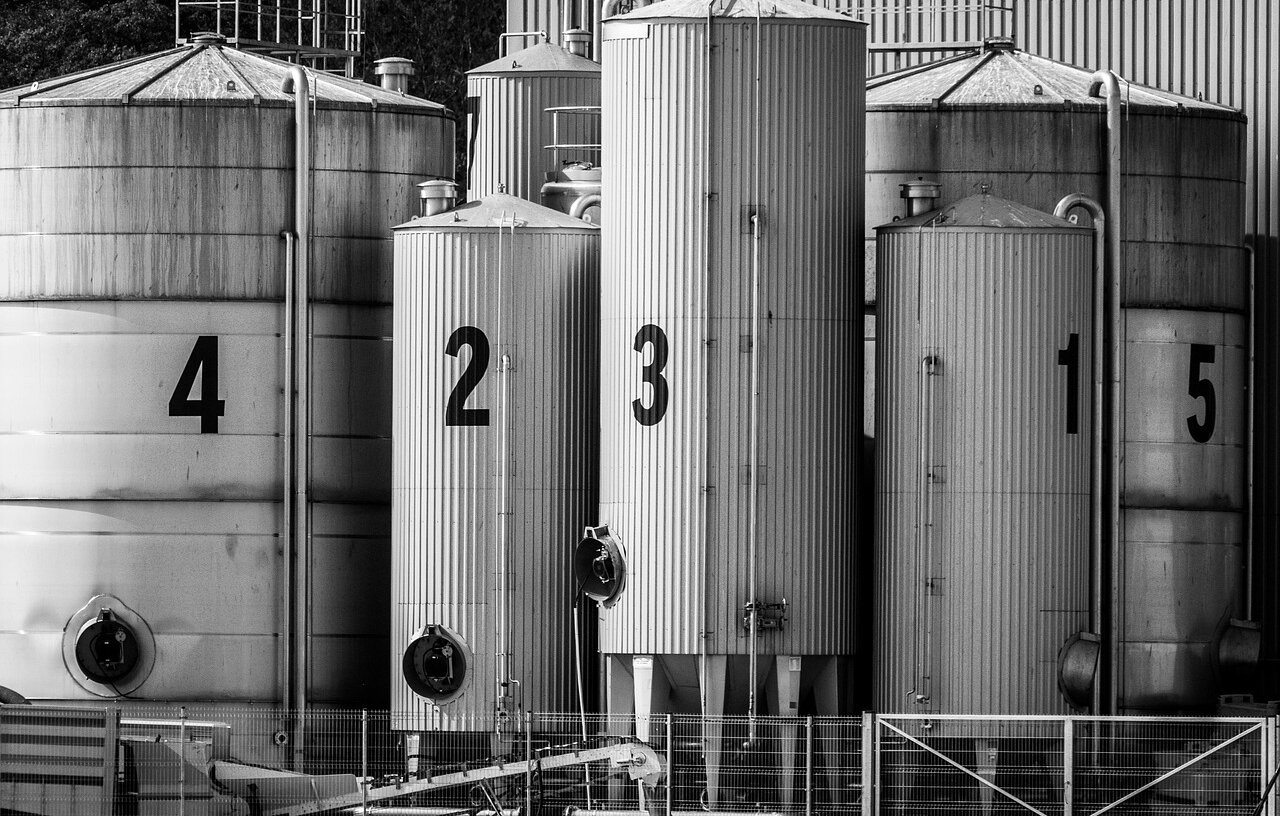
Stainless steel tanks are the most common choice for fresh, fruit-forward whites. Temperature-controlled, neutral (no oak flavour), and easy to clean, they preserve the natural character of the grape. Most Sauvignon Blanc, Pinot Grigio, Muscadet, and Riesling are fermented in stainless steel.
Oak barrels add flavour (vanilla, toast, smoke) and allow micro-oxygenation, building texture and complexity. New oak has more influence than used oak. Many white Burgundies (Chardonnay) are barrel-fermented, and this is a primary source of their richness.
Clay amphora and concrete eggs are increasingly used by producers who want the texture of oak ageing without the oak flavour — concrete and clay breathe slightly, building texture, while remaining flavour-neutral.
Lees ageing
After fermentation, the dead yeast cells (fine lees) settle at the bottom of the vessel. Ageing the wine on its lees adds complexity, richness, and a creamy texture — the yeast cells break down (a process called autolysis) and release compounds that give the wine body. Some producers stir the lees regularly (a technique called bâtonnage) for even more texture.
Muscadet's characteristic label note "sur lie" (on the lees) indicates extended lees ageing, which gives this otherwise simple wine its characteristic textural depth. White Burgundy also benefits substantially from lees contact.
Malolactic fermentation: the optional step
Unlike in red winemaking, malolactic fermentation (MLF — converting sharp malic acid to softer lactic acid) is optional for whites.
Winemakers who want fresh, high-acid whites (Sauvignon Blanc, Riesling, unoaked Chardonnay) typically block MLF, preserving the crisp malic acidity. Winemakers who want rounder, richer, more textured whites — especially barrel-fermented Chardonnay — allow MLF, which is why some Chardonnays have that distinctive creamy, buttery quality.
Full MLF + new oak + lees stirring = very rich, buttery, toasty white. No MLF + stainless steel + no lees stirring = very fresh, crisp, aromatic white. Most wines sit somewhere between these extremes.
Tell our sommelier your white wine preferences and we'll suggest a style and bottle that fits.
Questions we get asked
Can you make white wine from red grapes?
Yes — press gently and remove skins before fermentation. Since almost all grape flesh is colourless, you get pale juice. Champagne Blanc de Noirs is made entirely from Pinot Noir this way.
Why does some Chardonnay taste buttery and others don't?
The buttery quality comes from malolactic fermentation (which produces diacetyl, a buttery compound) and lees ageing with stirring. Chablis undergoes MLF but minimal lees stirring — round but not buttery. California Chardonnay with full MLF and new oak can be aggressively buttery.
What is 'orange wine'?
Orange wine is white wine made with extended skin contact — like red wine, but with white grapes. Skin contact extracts colour, tannin, and phenolics, producing amber, richer, more savoury wines. The style has ancient roots in Georgia and is popular in the natural wine movement.
Why are some white wines cloudy?
Cloudiness usually means unfined/unfiltered wine, residual yeast (common in natural wines), or tartrate crystals ("wine diamonds"). If the wine smells and tastes fine, cloudiness is cosmetic rather than a fault.