Alsace Wine, Explained
Alsace makes the most distinctive white wines in France — and the most misunderstood. German grapes, French technique, and a unique climate produce bottles that have no real equivalent anywhere else.
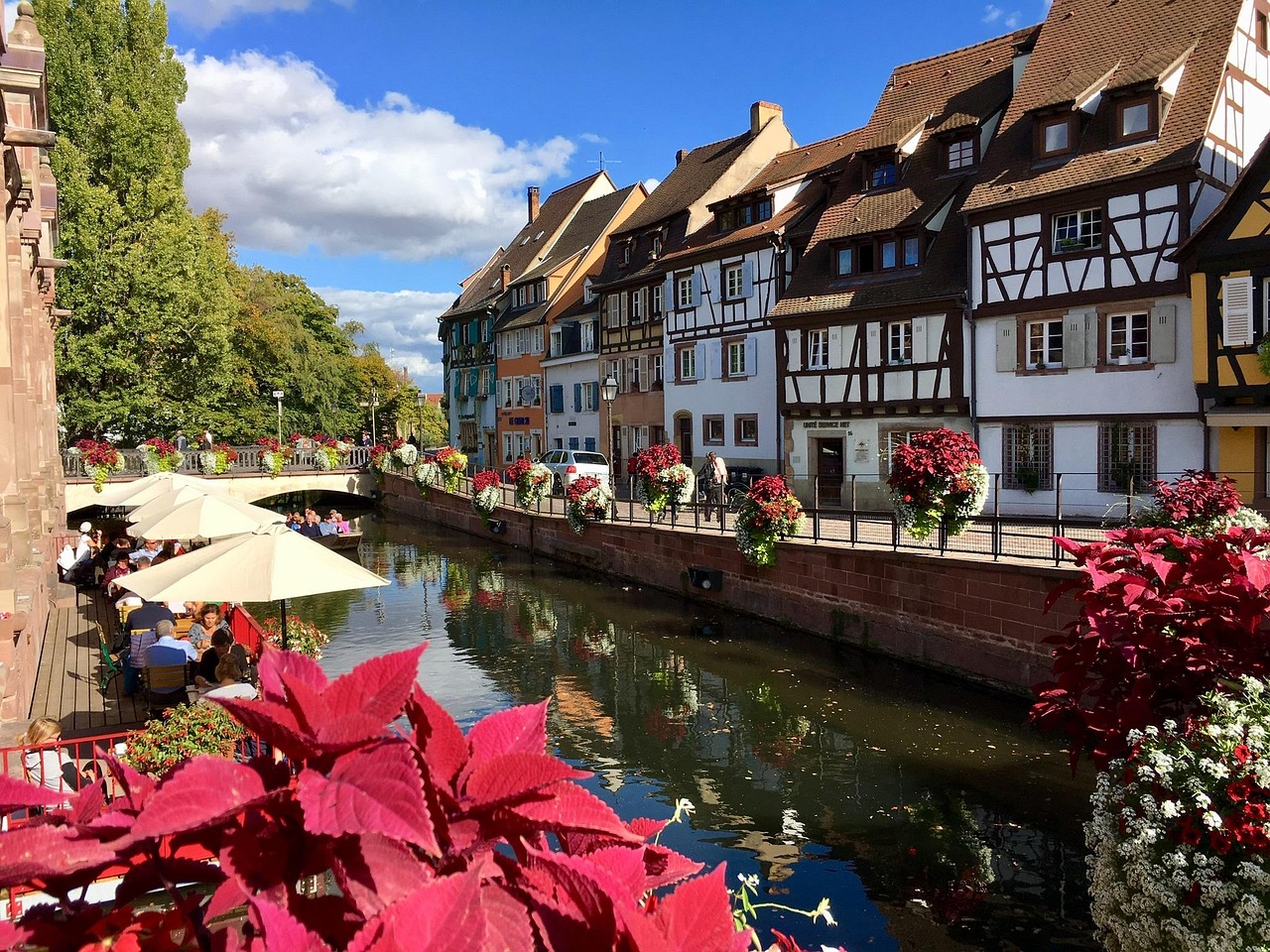
- Alsace is the only French region that labels its wines primarily by grape variety rather than appellation — Riesling, Gewurztraminer, Pinot Gris, and Muscat are the four noble varieties.
- The tall, slim bottle (Alsatian flûte) is a reliable indicator, but the real hallmark is the style: aromatic, dry (usually), and built with more texture and body than equivalent German wines.
- Vendange Tardive (late harvest) and Sélection de Grains Nobles (noble rot) are the two prestige sweet designations — both require exceptional vintages to make.
- The Vosges mountains to the west create a rain shadow that makes Alsace one of France's driest and sunniest wine regions — closer in climate to Germany's Pfalz than to Burgundy.
Alsace has spent most of its modern history confusing people. German-sounding names, French labels, a region that switched nationalities four times between 1871 and 1945 — the wines carry the history in them. What they offer, once you stop worrying about the context, is something France produces nowhere else: aromatic, powerful dry whites from cool-climate varieties grown in one of France's most peculiar microclimates. Worth knowing well.
The four noble varieties
Alsace has designated four grape varieties as "noble" — the ones permitted to make Vendange Tardive, Sélection de Grains Nobles, and the top Grand Cru wines.
Riesling is the serious one — the grape that ages most dramatically and reveals the most terroir. Dry Alsatian Riesling is a different creature from German Riesling: more body, less residual sugar (usually), and a mineral backbone that develops a distinctive petrol-and-citrus complexity with age. From the Grand Crus — Schlossberg, Brand, Schoenenbourg — these wines can age 20 to 30 years.
Gewurztraminer is the exotic one — rose petal, lychee, Turkish delight, ginger. It's an arresting wine that either captivates or overwhelms. It's nominally dry but has such a naturally full texture that it can seem sweet. At its best with equally aromatic food: Thai, Alsatian choucroute, foie gras.
Pinot Gris (called Tokay-Pinot Gris until 2007) occupies the middle ground — richer than Riesling, less flamboyant than Gewurz. Smoke, quince, and a faint spice on the finish. The most versatile of the four at the table.
Muscat is the lightest and the most delicate — floral, fresh, grapey, almost always completely dry. It's a wine for spring: drink within 2–3 years.
What about Pinot Blanc and Sylvaner?
These are the workhorse grapes — not noble, but important for everyday drinking. Pinot Blanc (often blended with Auxerrois) is the region's cleanest, most approachable wine: round, gentle, with a soft texture that makes it the perfect apéro white. Sylvaner produces the most austere wines in the region — lean, dry, and mineral when grown on limestone. Neither will knock you over, but both deliver reliable pleasure at modest prices.
Grand Cru and its controversies
Alsace has 51 Grand Cru sites — a number that some producers regard as far too many to be meaningful. The best Grand Crus (Rangen, Schlossberg, Muenchberg, Osterberg) are genuinely exceptional sites with specific geology that comes through in the wine. Others are more debatable. As a general rule: a Grand Cru from a serious producer (Trimbach, Zind-Humbrecht, Weinbach, Ostertag, Meyer-Fonné) is reliable. A Grand Cru from an unknown cooperative is not automatically better than a Réserve-level wine from a top domaine.
The sweet wines
Vendange Tardive (late harvest) means the grapes were picked at significantly higher sugar levels than normal — the wine may be off-dry to sweet depending on the producer and vintage.Sélection de Grains Nobles is richer still — individual botrytised berries hand-selected across multiple passes, like Sauternes. These wines can age 20–40 years and are made only in exceptional years. Neither designation can be made in every vintage.
The Alsace climate advantage
The Vosges mountains that border Alsace to the west intercept Atlantic rain systems heading east — most of the moisture falls on the French side of the mountain, leaving Alsace surprisingly dry and sunny. Colmar, the main city, is one of the driest cities in France. This allows grapes to achieve full phenolic ripeness even in cool conditions — the quality signature of the region.
Producers worth knowing
Trimbach is the most precise and austere — their Clos Sainte Hune Riesling is one of France's great white wines. Zind-Humbrecht is at the richer, more opulent end.Weinbach (Domaine Faller) sits between the two in style and is exceptionally reliable across the range. Meyer-Fonné offers excellent quality at more accessible prices. For sparkling Crémant d'Alsace, the cooperative Cave de Turckheim punches well above its price.
Want a recommendation from the Alsace range? Tell the sommelier whether you want bone-dry or something with a little more texture.
Questions we get asked
Is Alsace wine dry or sweet?
Mostly dry, but the situation is complicated. Standard bottlings of Riesling, Pinot Gris, and Gewurztraminer are legally dry but can have varying levels of residual sugar — producers are not required to indicate sweetness on the label. As a very rough guide: Trimbach tends toward bone dry; Hugel and Zind-Humbrecht can have more residual sugar in their basic range. The Vendange Tardive and Sélection de Grains Nobles are explicitly sweet; Muscat and most Pinot Blanc are dry. When in doubt, read the back label or ask.
How does Alsace Riesling differ from German Riesling?
Alsatian Riesling is typically drier, fuller-bodied, and higher in alcohol than German Riesling. The French style emphasises body and power; the German style (especially Mosel) emphasises freshness, delicacy, and mineral tension at lower alcohol. Both age spectacularly — different directions from the same grape.
What food goes with Gewurztraminer?
Gewurztraminer needs aromatic, flavourful food or it fights the meal. Classic matches: Alsatian choucroute (sauerkraut with pork), foie gras (it loves the richness), Thai curry (spice and lychee are natural partners), Munster cheese (a famous local pairing), and anything with ginger or warming spices. It struggles with subtle, delicately seasoned food — the wine simply overwhelms everything.
Is Crémant d'Alsace worth buying?
Yes — consistently. Crémant d'Alsace is made by the traditional method (same as Champagne) primarily from Pinot Blanc, Riesling, and Auxerrois. The best examples are genuinely fine, with real brioche and citrus complexity. They're typically 30–50% of equivalent-quality Champagne prices. A Blanc de Noirs Crémant d'Alsace from Pinot Noir can be a minor revelation.