How to Read a Wine Label
A wine label contains almost everything you need to know about what's inside. Once you understand the structure, the code breaks quickly.
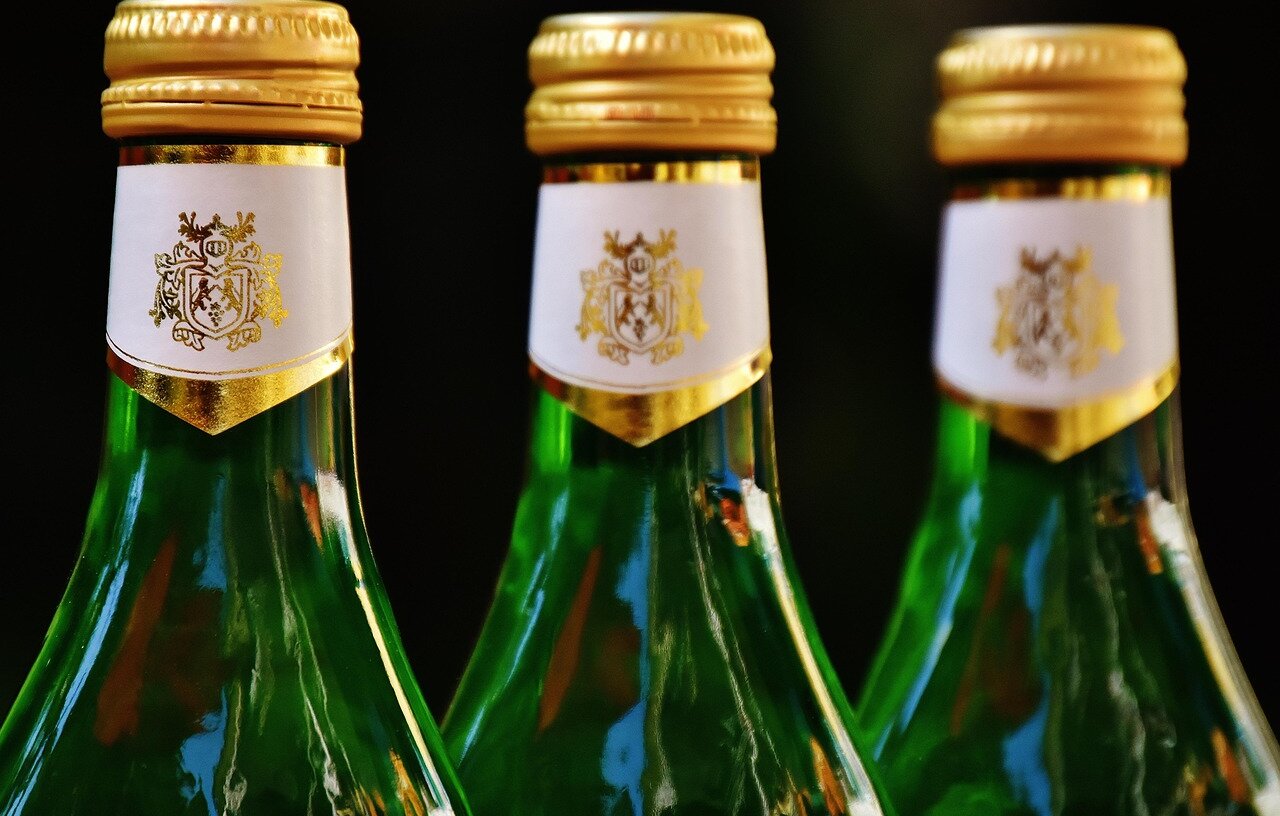
- European labels (France, Italy, Spain) are named by region; New World labels (US, Australia, Chile) are usually named by grape variety.
- The vintage year is when the grapes were harvested — not when the wine was bottled or released.
- Alcohol percentage tells you roughly how full-bodied the wine will feel: 11–12.5% is light, 13–14% medium, 14.5%+ is full-bodied.
- Terms like Réserve, Classico, or Gran Reserva have legal definitions in some countries and mean almost nothing in others — context matters.
Wine labels look more complicated than they are. Once you know what each section is trying to tell you — and why European and New World labels follow different conventions — reading one takes about thirty seconds. Here's the breakdown.
The producer name
Always on the label, though it might be styled as a château, a domaine, a winery, or simply a family name. The producer is your most reliable guide to quality. A great producer in an average vintage is often more reliable than a mediocre producer in a celebrated one. Once you find producers you trust, their name is the first thing you look for.
The region vs. the grape: Old World vs. New World
This is the source of most label confusion for beginners.
Old World (France, Italy, Spain, Germany, Austria): Labels lead with the region or appellation, not the grape variety. A bottle labelled "Chablis" is a Chardonnay — Chablis is a French appellation where only Chardonnay is grown — but the grape is not on the front label. A "Barolo" is Nebbiolo. A "Rioja" is mostly Tempranillo. The assumption is that you already know what grows where, which is why Old World labels feel opaque to beginners.
New World (USA, Australia, Argentina, Chile, South Africa, New Zealand): Labels lead with the grape variety, because the producers know their buyers don't want to decode geography. A Napa Valley Cabernet Sauvignon, a Marlborough Sauvignon Blanc — the grape is front and centre.
The practical implication: if you're standing in a shop and the label says "Cabernet Sauvignon" or "Chardonnay," you're probably holding a New World wine. If it says "Pomerol," "Alsace," or "Barolo," you're holding an Old World wine and you'll need to know (or look up) the grape.
The vintage
The year on the label is the year the grapes were harvested, not when the wine was bottled or put on sale. A 2019 Bordeaux was harvested in autumn 2019, probably bottled in 2021, and may have arrived on a shop shelf in 2022 or later.
For most everyday wines, the vintage is less important than the producer. For fine wines — Burgundy, Bordeaux, Barolo, top Champagne — vintage matters a great deal because the weather genuinely changes the character of the wine from one year to the next. In a warm, generous year, wines are ripe and full; in a cool or rainy year, leaner and more acidic.
A few wine categories are intentionally non-vintage: standard non-vintage Champagne (NV) is blended across multiple years for consistency, and most sherries and ports are similarly non-dated.
The alcohol percentage
This is a better guide to body than most consumers realise. As a rough rule:
11–12.5% — lighter-bodied wines. German Riesling, Vinho Verde, Muscadet, some sparkling wines.
13–14% — medium-bodied. Most everyday Bordeaux, Burgundy, and Italian reds.
14.5%+ — full-bodied, warming. Châteauneuf-du-Pape, California Zinfandel, big Australian Shiraz.
High alcohol without the fruit and acidity to balance it feels hot and heavy. When everything is in balance, a 15% wine can drink more gracefully than an unbalanced 13%.
Appellation and classification terms
AOC / AOP / DOC / DOCG / DO / DAC — these are official appellation designations. They tell you the wine meets the legal rules for that region (grape varieties allowed, minimum alcohol, yield limits). AOC is French, DOC/DOCG is Italian, DO is Spanish, DAC is Austrian.
Réserve (France) / Riserva (Italy) / Reserva or Gran Reserva (Spain): In Spain and Italy, these terms have legal definitions — a Rioja Reserva must age for a minimum time in oak and bottle. In France, "Réserve" has no legal meaning; any producer can use it for marketing.
Premier Cru / Grand Cru (France): These are official quality classifications in regions like Burgundy and Bordeaux. In Burgundy, a Grand Cru is the highest classification of vineyard. In Bordeaux, the 1855 classification gave châteaux a ranking from First Growth (Premier Cru Classé) to Fifth Growth. These terms are legally defined and specific.
Classico (Italy): A wine made from the historic core of an appellation — generally considered superior to wines from the wider zone. Chianti Classico comes from the original heartland between Florence and Siena.
The back label
Often more useful than the front for everyday buyers. It typically gives you:
A tasting note describing the wine's style (read critically — it's marketing, but it usually gives you a sense of body and flavour). A food pairing suggestion. Serving temperature. The importer's details. Some back labels include the technical sheet: residual sugar, total acidity, pH. If you see this, a higher total acidity number means a more vibrant, food-friendly wine; lower means rounder and softer.
The most reliable single piece of information on the back label is the importer. A wine carried by a reputable specialist importer is a quality signal in its own right — good importers don't carry bad wines.
Holding a label that doesn't make sense? Describe it to our sommelier and we'll decode it for you.
Questions we get asked
Why don't French wines just say what grape they're made from?
Tradition and appellation law. In the Old World, the place tells you the grape because each appellation specifies which varieties are permitted. If it says Chablis, the law requires Chardonnay. Producers in these regions felt — and the law agreed — that the place was more informative than the grape variety alone.
What does 'mis en bouteille au château' mean?
"Estate-bottled" — the wine was bottled at the property where it was made. Today this is standard among quality producers; it matters less as a quality signal than it once did.
Does a higher price always mean better wine?
Not always, but there's a correlation up to a point. The quality jump from CHF 10 to CHF 25 is substantial. Above CHF 80 or so, you're partly paying for reputation and scarcity. Some of the most consistently pleasurable wines are in the CHF 25–45 bracket.
What does 'Vieilles Vignes' mean?
"Old vines" in French. Older vines produce fewer but more concentrated grapes. There's no legal definition, so quality varies, but producers who use the term seriously usually mean it.