Riesling, Explained
Riesling produces the world's most age-worthy white wines and the widest range of styles — from bone-dry to lusciously sweet — all sharing the same intense acidity and aromatic precision.
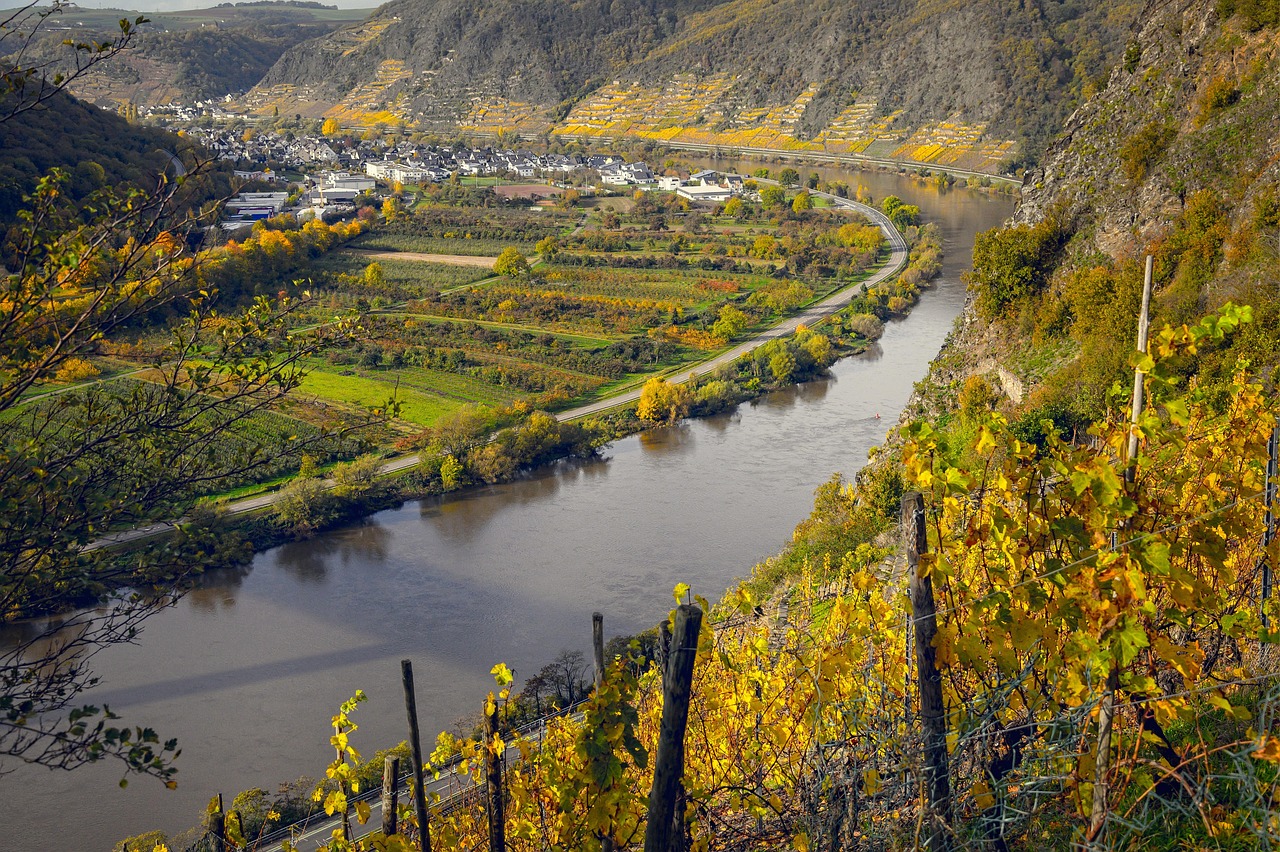
- Riesling is the world's most versatile white grape — it produces excellent dry wine, excellent off-dry wine, and some of the greatest sweet wines ever made, all within the same high-acid, aromatic framework.
- Germany's Mosel and Rhine valleys (Rheingau, Nahe, Pfalz) are the heartland, producing Riesling of extraordinary delicacy and longevity. Alsace produces a richer, drier, more powerful style.
- The sweetness level in German Riesling is indicated on the label: Kabinett (lightest), Spätlese, Auslese, Beerenauslese, and Trockenbeerenauslese. Trocken means dry; look for this if you prefer minimal residual sugar.
- Riesling develops one of wine's most distinctive aged characteristics: a petrol or kerosene note that develops after five or more years in bottle. This is not a fault — it is a sign of development and is considered a marker of quality.
Riesling occupies a paradoxical position in the wine world. Among knowledgeable wine drinkers, it is routinely cited as one of the world's greatest white grape varieties — capable of extraordinary longevity, versatility, and expressive complexity. Among casual wine buyers, it is frequently avoided due to a perception that it is sweet, thin, or German in a way that feels old-fashioned. Both reputations are partially founded and both are substantially misleading.
Understanding Riesling means understanding why its most devoted advocates consider it the greatest white wine grape of all — and then drinking a great example to see if they are right.
The grape's character
Riesling is always high in acidity — one of the highest of any white variety — and always intensely aromatic. The core aromatics: lime, lemon, peach, apricot, and white flowers. The grape has an affinity for slate and mineral soils that it expresses directly in the wine as a pronounced mineral character — the famous schieferartig (slate-like) quality of Mosel Riesling is real and distinctive.
With age — five, ten, twenty years — Riesling develops a secondary character that wine writers describe as petrol, kerosene, or diesel. This sounds unappealing, but in context it is a complex, savoury element that integrates with the fruit and mineral character to produce a wine of extraordinary depth. Tasters either find it compelling or disconcerting. Most serious Riesling drinkers consider it one of wine's most distinctive and pleasurable aged characteristics.
Germany: the Mosel
The Mosel Valley, with its precipitous slate slopes, meanders through a landscape that is almost impossibly beautiful and almost impossibly difficult to farm. Vines on slopes of up to 65 degrees are worked by hand; mechanisation is impossible. The effort produces Rieslings of extraordinary delicacy and precision — some of the lightest-alcohol great wines in the world (7.5–9% is common) with a racy, almost crystalline quality and penetrating mineral character.
The great Mosel estates — Egon Müller, J.J. Prüm, Mosel-Saar-Ruwer's great crus — produce Rieslings that age for thirty to fifty years. Their Trockenbeerenauslese (TBA) wines, from individually selected, shrivelled, botrytis-affected berries, are among the most concentrated and long-lived sweet wines made anywhere.
Germany: the Rhine
The Rheingau (opposite bank from the Mosel), Nahe, and Pfalz produce Riesling in different registers. Rheingau Riesling is fuller-bodied and more classical — the wines of Schloss Johannisberg and Robert Weil are benchmark examples. The Nahe produces wines of great aromatic finesse. The Pfalz, with its warmer climate, produces riper, more generous Riesling that is often the most accessible German expression for wine drinkers new to the variety.
Alsace: the richer style
Alsace, on the French side of the Rhine, produces Riesling in a completely different register from Germany. Protected from Atlantic rain by the Vosges mountains, Alsace has one of the driest climates in France — and Riesling here ripens more fully, producing wines that are drier, richer, and higher in alcohol than Mosel expressions. Alsatian Riesling tends toward white peach, quince, and spice, with a more textural weight and less of the delicate crystalline quality of the Mosel.
Riesling elsewhere
Australia's Clare and Eden Valleys in South Australia produce distinctive dry Riesling with a lime and toast character that ages well, often developing more quickly than German examples. New Zealand's Marlborough and Central Otago produce good Riesling that has not yet attracted the international attention it deserves. Austria's Wachau and Kremstal regions produce Riesling with the country's characteristic mineral precision.
Reading a German Riesling label
The German Prädikat system ranks wines by the ripeness of the grapes at harvest. From lightest to richest: Kabinett, Spätlese, Auslese, Beerenauslese, Eiswein, and Trockenbeerenauslese. These levels indicate potential sweetness but not actual sweetness — a Spätlese can be fermented to dryness if the winemaker chooses. Look for "Trocken" (dry) or "Halbtrocken" (off-dry / medium-dry) on the label if you want minimal residual sugar.
Tell the sommelier whether you prefer dry or off-dry — get a Riesling that suits you.
Questions we get asked
Is Riesling always sweet?
No. Riesling spans the full spectrum from bone-dry to intensely sweet. German Trocken (dry) Riesling and Alsatian Riesling are completely dry. Kabinett is off-dry with high acidity. Spätlese and Auslese are sweeter but still balanced by acidity. Trockenbeerenauslese is the most concentrated sweet expression. The label is the guide.
What does the petrol smell in Riesling mean?
A petrol, kerosene, or diesel note in aged Riesling comes from a compound called TDN that develops naturally with bottle age. It is not a fault — experienced Riesling drinkers find it highly desirable. A good Mosel Spätlese develops this quality after eight to twelve years. If it bothers you initially, try a younger wine; with exposure, most people find it compelling.
How long can Riesling age?
Great German Riesling is among the world's most age-worthy white wines. Mosel Spätlese from a good producer can develop for fifteen to twenty-five years; Auslese for twenty to forty years. Even entry-level Riesling from a good producer improves for five to ten years. The high acidity acts as a preservative.
What food pairs with Riesling?
Dry Riesling's high acidity and aromatic intensity make it ideal for spiced and aromatic cuisines — Thai, Indian, Moroccan — that defeat most other white wines. It is outstanding with pork and pork belly, charcuterie, and Asian noodle dishes. Off-dry Riesling is the best match for spicy food of any style.