Vaud & Lavaux: Lakeside Vineyards
The Lavaux terraces above Lake Geneva are a UNESCO World Heritage site — steep, meticulously tended, and the source of some of the most site-specific Chasselas in the world. This is Switzerland's most scenic wine region, and one of its most serious.
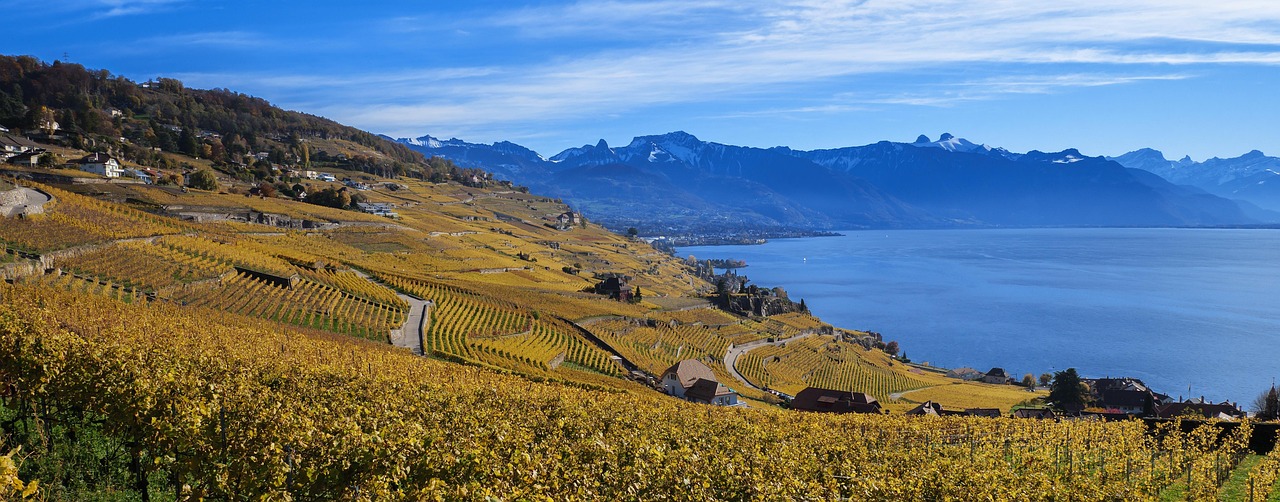
- The Lavaux appellations (Lutry, Villette, Epesses, Saint-Saphorin, Dezaley, Calamin) each produce distinctly different Chasselas from the same variety — the terroir argument made in one small stretch of lakeshore.
- Dezaley and Calamin are the two Grand Cru appellations of the Lavaux — both small, both on the steepest south-facing terraces, both producing the most complex Chasselas wines in the canton.
- The 'three suns' effect — direct sun, sun reflected from the lake surface, and heat retained in the stone terrace walls — is what allows Chasselas to ripen fully on these steep north-bank slopes.
- Vaud also produces good Pinot Noir, Gamay, and Garanoir, though white wine dominates — around 60% of Vaud's production is Chasselas.
Few wine landscapes in the world are as immediately striking as the Lavaux. Between Lausanne and Vevey, the north shore of Lake Geneva rises steeply from the water to the plateau above — and almost every centimetre of that slope is under vine, on terraces built and rebuilt by monks since the 11th century. The UNESCO designation (2007) recognised not just the beauty of the landscape but the extraordinary human labour embedded in it: the walls, the narrow paths, the irrigation channels, the centuries of accumulated knowledge about how to farm these slopes. It is one of the most intensely maintained viticultural landscapes on earth, and the wines from its best sites reflect that.
The appellations of the Lavaux
The Lavaux is divided into a series of appellations running east from Lausanne: Lutry,Villette, Epesses, Saint-Saphorin, and at the eastern end the two Grand Crus — Dezaley and Calamin.
Lutry is the gentlest introduction — lighter, more delicate Chasselas from the western end of the appellation. Villette steps up in concentration and mineral character.Epesses produces tenser, more mineral wines from its steeper south-facing slopes.Saint-Saphorin is broader, rounder, with a slightly waxy texture that distinguishes it from the eastern appellations.
Dezaley is the most celebrated: a south-southwest-facing slope above the town of Cully, planted almost entirely to Chasselas on limestone and rocky moraine. The wines have more body and ageing potential than any other Lavaux Chasselas — and from producers like Louis-Philippe Bovard or the Testuz estate, they can develop for 8–10 years. Calamin, adjacent, produces slightly lighter but equally distinctive wines from clay and limestone.
The three suns
Local winemakers speak of the "three suns" that ripen Lavaux grapes: the direct sun that hits the steep south-facing slopes at an acute angle; the sun reflected from the surface of the lake below; and the heat stored in the stone terrace walls during the day and radiated back onto the vines at night. The combination means that despite the latitude (roughly that of Burgundy's Côte d'Or), Chasselas in the Lavaux reaches full ripeness in most years. It's why these terraces exist where they do: anyone who chose a north-facing site wouldn't have a wine industry.
Chasselas: why it matters here
The rest of the wine world largely ignores Chasselas because the rest of the wine world doesn't grow it in conditions that make it interesting. In the Lavaux, the combination of lake influence, steep slopes, specific soil types, and generations of producer knowledge produces wines that express their origin in a way the variety rarely achieves elsewhere. A Dezaley and an Epesses from the same vintage taste different — not in a subtle way, but in a way you'd notice if you put them side by side without knowing the appellation names. That's what the Swiss mean when they talk about Chasselas as a terroir grape.
Beyond Lavaux: the rest of Vaud
Vaud's vineyards extend beyond the Lavaux into La Côte (west of Lausanne, gentler slopes, lighter wines) and the Chablais (northeast, around Aigle and Ollon, bordering the Valais). The Chablais produces some of Vaud's more structured whites — a transitional zone between the lake-influenced Lavaux and the alpine character of the lower Valais.
For red wine: Pinot Noir is the primary variety across Vaud, typically lighter and more delicate than the Valais versions. The Gamaret and Garanoir crossings add colour and structure in blends. The Merlot and Syrah planted near the Valais border are gaining quality as producers learn the variety.
Producers to know
Louis-Philippe Bovard (Domaine Bovard) is the reference for Dezaley — meticulous, estate-bottled, with vineyard-specific cuvées that demonstrate the terroir argument as clearly as anyone in Switzerland. Blaise Duboux and Obrist are reliable names across the Lavaux appellations. Luc Massy in Epesses makes beautifully precise wines that show the appellation's mineral character at its best.
To buy Lavaux Chasselas online — a Grand Cru or a village wine chosen for your specific occasion — a curated Swiss wine selection with a built-in sommelier is available.
Looking for a Vaud wine? Tell the sommelier what occasion you're buying for and we'll find the right Chasselas.
Questions we get asked
What makes Dezaley wine special?
Dezaley is one of just two Grand Cru appellations in the Lavaux — a small, south-facing slope on limestone and moraine above the town of Cully. The combination of soil, aspect, lake influence, and very old vines produces Chasselas wines with more body, complexity, and ageing potential than any other Lavaux appellation. From Louis-Philippe Bovard or the Testuz estate, a Dezaley at 5–8 years old can be a genuinely surprising wine.
How long does Lavaux Chasselas age?
Most Lavaux Chasselas is best within 3–5 years. But the Grand Crus — Dezaley and Calamin — from good producers and ripe vintages can age 8–12 years, developing a nutty, complex richness. Drink lighter appellation wines young; keep the Grand Crus for a few years.
What food goes best with Lavaux Chasselas?
Lavaux Chasselas is Switzerland's great food white — its delicacy and freshness make it brilliant with almost anything that doesn't call for tannic red. Classics: lake fish (perch, trout, pike-perch), fondue, ham and cheese, white asparagus in spring, soft local cheeses. Its slight mineral quality and low alcohol make it possible to drink through a long meal without fatigue.
Can I visit the Lavaux vineyards?
Yes — the Lavaux is easily accessible from Lausanne and Montreux by train or car. The Lavaux Express tourist train runs through the terraces in summer. Many producers offer cellar visits and tastings by appointment. The walking trails through the vineyards are marked and offer some of the best views in Switzerland.