Wine & Food Pairing: A Simple Guide
Wine and food pairing doesn't require rules memorised from a textbook. It requires two ideas and a willingness to experiment. Here are the ideas.
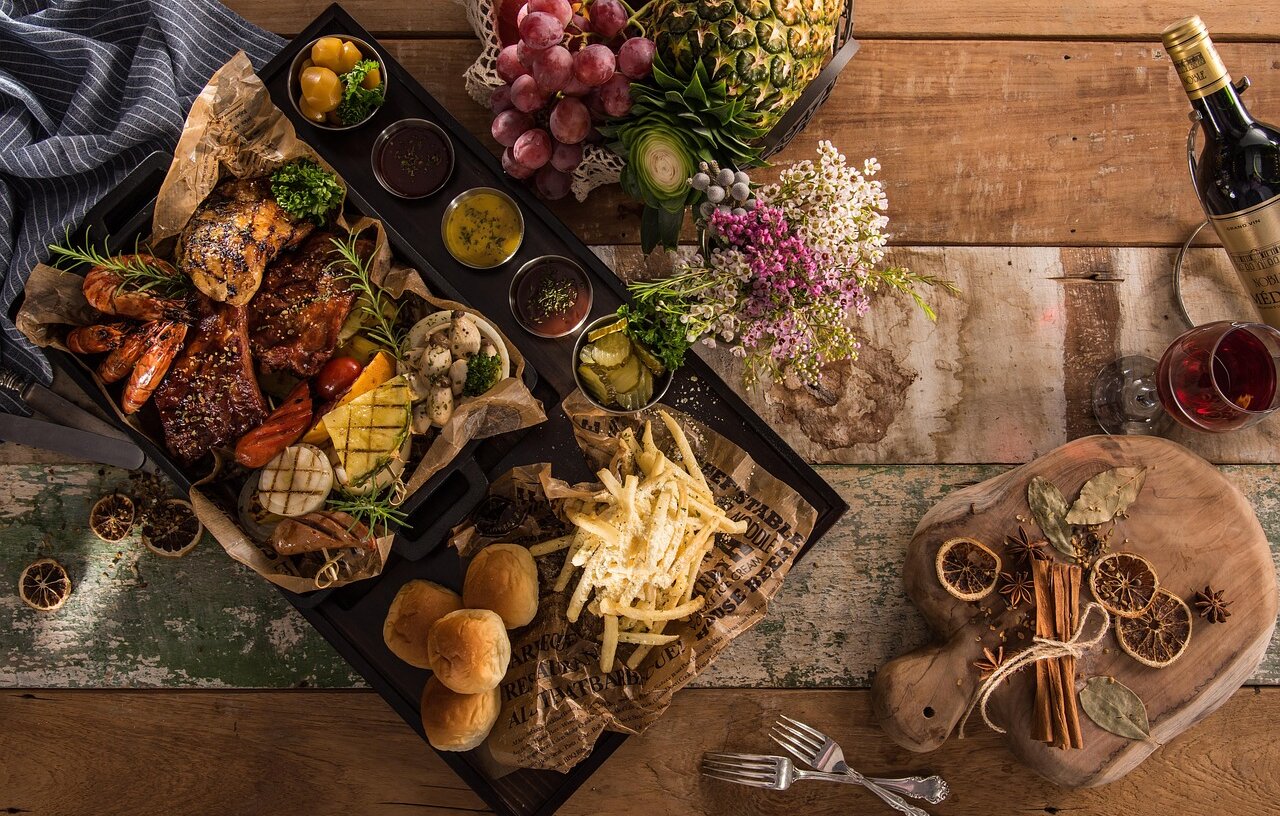
- The two fundamental principles: match weight (light food with light wine, rich food with full wine) and use acidity or tannin to cut through fat. Everything else is refinement on top of these.
- Regional pairings work because they evolved together — the wine grown in a place tends to complement the food cooked there. Chianti and bistecca, Muscadet and oysters, Fendant and raclette.
- The most important pairing rule: avoid tannic red wine with delicate or light dishes. Tannin overwhelms subtlety. Save the Barolo for the braised lamb, not the sea bass.
- A wine with high acidity is the most versatile food wine — it cuts through fat, pairs with richness, and refreshes the palate. Champagne, Chablis, Pinot Noir, Barbera: all work across a wide range of dishes.
The anxiety around wine and food pairing is largely invented — a product of restaurants and wine writers making something practical seem like a specialist skill. The truth is that most wine pairs acceptably with most food. The question is not "what must I drink with this?" but "what will make this meal more pleasurable?" That's a more interesting question, and it has more than one right answer.
The two things that actually matter
Strip out every rule you've ever heard and two principles remain.
The first is weight matching. A delicate wine disappears next to a powerful dish; a powerful wine overwhelms a delicate one. Light-bodied wines (Muscadet, Pinot Grigio, Beaujolais) belong with light food (seafood, salads, simple pasta). Full-bodied wines (Barolo, Châteauneuf-du-Pape, Napa Cabernet) belong with rich, substantial food (braised meats, game, aged cheese). Match the size of the wine to the size of the dish.
The second is contrast to cut. Fat needs acid or tannin to balance it — without a cutting element, richness becomes heaviness. Champagne with fried food. Sancerre with a creamy goat cheese. Chianti's acidity with the fat of bistecca. The wine doesn't need to mirror the food; it needs to provide what the food lacks.
Regional pairing: why it often works
Wine and food have evolved together in wine-producing regions over centuries. The wines of Bordeaux developed alongside the local cuisine — rich river fish, duck confit, lamb from the salt marshes. Burgundy's Pinot Noir grew alongside the region's mushroom-heavy, butter-based cooking. The Valaisan Fendant became the standard wine for raclette because it was what was available — and because it works. These pairings weren't designed by sommeliers; they developed organically because the wines and food share soil, climate, and cultural context.
The practical lesson: when in doubt, drink regional. A Tuscan wine with Tuscan food, an Alsatian Riesling with Alsatian choucroute, a Swiss Chasselas with Swiss cheese. Regional pairings have centuries of refinement behind them.
The most versatile food wines
Some wines pair well with almost everything. They tend to share one quality: high acidity. Acidity is the universal cutting agent — it refreshes the palate, lifts fat, and harmonises with salt.
The most versatile: Champagne and other quality sparkling wines (the bubbles amplify the acidity's palate-cleansing effect); Chablis and other unoaked Chardonnay; Pinot Noir (moderate tannin, high acidity, works across poultry, fish, pork, and lighter red meat); Riesling; Barbera d'Asti; Swiss Chasselas. If you're choosing one bottle for a varied meal with multiple dishes, these are where to look.
The pairings to avoid
Certain combinations reliably produce unpleasant results.
Tannic red wine with delicate fish: tannin + fish = metallic, unpleasant. Exceptions: fatty fish (salmon, tuna) can handle a light red.
Sweet wine with savoury food: the sweetness in the wine reads as cloying alongside salt. Exceptions: off-dry Riesling or Gewurztraminer with rich, spiced dishes.
High-alcohol wine with spicy food: alcohol amplifies heat. The result is not pleasantly spicy but painfully hot. A low-alcohol, off-dry wine (Riesling Spätlese, Gewurztraminer) handles spice far better than a 14.5% Cabernet.
Very tannic wine with very sweet food: tannin + sweetness = the wine tastes harsh and the food tastes hollow.
Cheese and wine: the classic pairing reconsidered
White wine pairs with cheese better than red wine does — in the vast majority of cases. This is the most important and most ignored pairing principle. Tannin and fat from cheese produce a chalky, drying sensation. A dry Riesling, a good Champagne, a nutty Comté-region Jura white — all work better than most reds. The exceptions: Époisses with Burgundy red (local pairing, and it genuinely works), aged Cheddar with vintage Port, aged Parmesan with Barolo. But these are exceptions to a reliable general rule.
The practical approach
Before picking a wine for a meal, ask: How rich is the main dish? What sauces or fats are involved? Is there spice or acidity in the food already? Answering these three questions will get you 80% of the way there. The remaining 20% is personal preference — and that's the part worth experimenting with.
If you're uncertain which wine fits your specific menu, choose wine for the dinner — describe the dish, the occasion, and the budget, and you'll get a recommendation rather than a search result.
Planning a meal and want pairing advice? Tell the sommelier what you're cooking and your budget — we'll find the right bottles.
Questions we get asked
Does wine temperature affect food pairing?
Yes, significantly. A Beaujolais at room temperature is flabby and difficult with food; the same wine at 12°C is vibrant and versatile. Too-cold white wine loses its aromatics and seems thin. The pairing changes when the temperature changes. Serve a degree or two cooler than you think, especially in a warm room — the glass will warm in your hand.
Can you serve red wine with fish?
With caution. Light, low-tannin reds (Beaujolais, Pinot Noir, light Burgundy) work with fatty fish like salmon, tuna, or sardines. Tannic reds produce a metallic, unpleasant reaction with most fish because tannin interacts with fish oils. If you want red with fish, choose the lightest, lowest-tannin option you can find.
What's the best wine to serve at a dinner party with multiple dishes?
Start with something light and versatile — good Champagne covers almost all first courses. Move to a white that can bridge between courses (Pinot Gris, Chardonnay). For red with the main: Pinot Noir is the most versatile because it has enough structure for red meat but won't overwhelm poultry or duck. For cheese: switch back to white, or serve Port with a strong blue.
Is it ever okay to pair sweet wine with a main course?
Yes, in specific cases. Off-dry Riesling or Gewurztraminer with Thai or Indian food is one of wine's great cross-cultural pairings. Sauternes with Roquefort is legendary. The key is that the food must have enough sweetness or richness to absorb the wine's residual sugar — purely savoury dishes don't work.