Pinot Noir: A Beginner's Guide
Pinot Noir is the most seductive and the most demanding grape in wine. Understanding it unlocks Burgundy, Oregon, New Zealand, and some of the greatest bottles ever made.
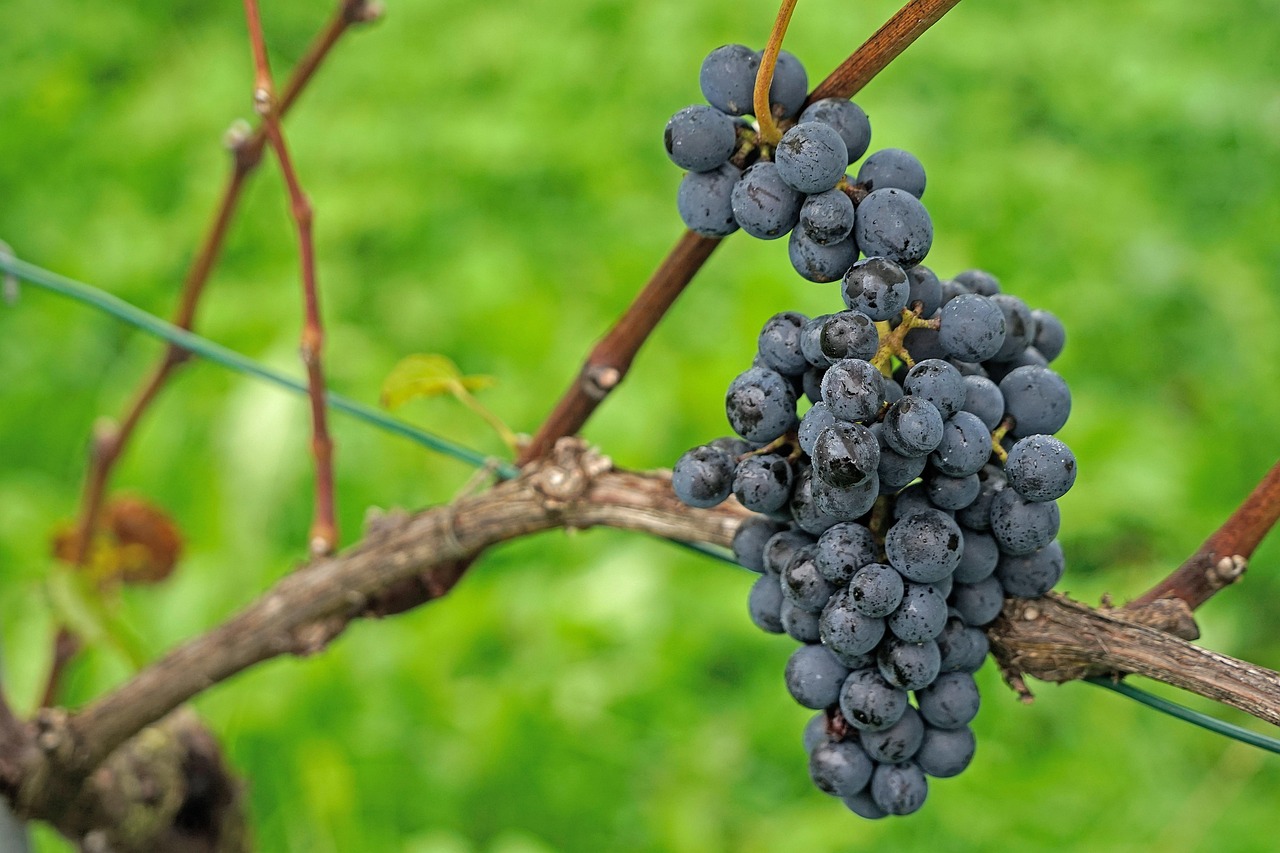
- Pinot Noir is thin-skinned, early-ripening, and brutally site-sensitive — it expresses its environment more clearly than almost any other grape. This is what makes it fascinating and what makes it difficult to grow.
- Classic Burgundy Pinot Noir smells of red cherry, earth, and dried rose petals. With age, it develops leather, game, and truffle. New World Pinot tends toward riper dark fruit with less earthy complexity.
- Oregon's Willamette Valley, New Zealand's Central Otago and Martinborough, and Germany's Baden are the most compelling non-Burgundy sources for Pinot Noir.
- Pinot Noir is one of the most food-flexible red wines: low tannin and high acidity make it pair beautifully with salmon, duck, mushrooms, and anything that would overwhelm a lighter wine but struggle against a bigger red.
Pinot Noir occupies a unique position in wine: it is the grape that inspires the most devotion, produces the most expensive bottles in the world, and requires the most from both the grower and the terroir. At its best, it produces wines of extraordinary elegance and complexity — wines that seem to speak of a specific place in a specific moment in time. At its worst, it produces thin, pale, joyless liquid that demonstrates only how easily the variety disappoints.
Understanding Pinot Noir means understanding two things: what makes it exceptional when everything goes right, and what happens to it when the terroir is wrong or the winemaking is careless.
The grape and its character
Pinot Noir is one of the oldest cultivated grape varieties, genetically unstable enough that it has produced hundreds of clonal variations over centuries. It is thin-skinned — which means lower tannin than Cabernet Sauvignon or Syrah, contributing to its signature silky texture — and early-ripening, which makes it vulnerable to spring frost and poor flowering weather. It prefers cool climates where slow ripening preserves acidity alongside the fruit.
The classic Pinot Noir profile: red cherry, raspberry, dried rose petal, and forest floor on the nose; silk texture with moderate tannin and lively acidity on the palate. With age, it develops into something deeper — leather, sous-bois (the French term for "undergrowth"), game, and truffle. This evolution is part of what makes mature Burgundy so compelling and so difficult to describe to someone who hasn't experienced it.
Burgundy: the benchmark
Burgundy's Côte d'Or — the thirty-kilometre strip of east-facing slopes south of Dijon — is considered the definitive home of Pinot Noir. The combination of Jurassic limestone soils, a continental climate moderated by proximity to the forest of the Morvan, and centuries of accumulated viticultural knowledge has produced a wine culture in which the specific patch of land matters more than almost anything else.
Burgundy is organised into a hierarchy of appellations. Village wines (Gevrey-Chambertin, Chambolle-Musigny, Vosne-Romanée) represent the character of a community's terroir. Premier cru wines come from specific, named vineyard plots within a village with historically superior soils. Grand cru wines — thirty-three in total — represent the most celebrated individual vineyards, including Chambertin, Musigny, and the Domaine de la Romanée-Conti's holdings in Vosne-Romanée.
This hierarchy is not merely prestige-driven: the differences in soil composition, aspect, and drainage between adjacent vineyards genuinely produce different wines, and the finest grand crus produce wines of singular complexity that justify their extraordinary prices in a way few wines do.
Beyond Burgundy
Oregon (Willamette Valley): The most celebrated non-French source of Pinot Noir. The climate is cooler and wetter than California, sharing more with Burgundy than with Napa. Oregon Pinot Noir tends toward red fruit, forest floor, and a leanness of structure that makes it feel European in character. Producers like Eyrie, Adelsheim, and Domaine Drouhin Oregon have demonstrated that world-class Pinot Noir is possible outside Burgundy.
New Zealand (Central Otago, Martinborough): Central Otago in the South Island's interior produces intense, deeply coloured Pinot Noir with concentrated dark cherry and plum fruit — riper than Burgundy, with a New World generosity. Martinborough, near Wellington, produces a more restrained, often earthy style. Both regions have established themselves as serious Pinot Noir producers.
Germany (Baden, Ahr, Pfalz): German Spätburgunder (Pinot Noir) is experiencing a quality renaissance. The best examples are pale, delicate, and mineral — closer in spirit to cool-climate Burgundy than to New World Pinot. Largely unknown outside Germany, and therefore excellent value.
Serving and pairing
Pinot Noir is best served slightly cooler than most red wines — 14–16 °C rather than room temperature. Its moderate tannin and bright acidity make it one of the most versatile reds at the dinner table: it pairs naturally with salmon and tuna (rare among reds), with duck and game birds, with earthy mushroom dishes, and with almost any preparation involving red fruit sauces. It is one of the few reds that works with a cheeseboard featuring both soft washed-rind and harder aged styles.
For Pinot Noir recommendations matched to your specific dish and budget — from Swiss village expressions to Burgundy — the sommelier can help you navigate the options.
Tell the sommelier your budget and occasion — get a Pinot Noir recommendation.
Questions we get asked
Why is Pinot Noir so expensive?
The finest Pinot Noir — Grand Cru Burgundy — is expensive for two reasons: genuine scarcity (the Côte d'Or's most celebrated vineyards are tiny and produce small quantities) and genuine quality. Below Grand Cru level, quality Pinot Noir from village Burgundy, Oregon, and New Zealand is available at reasonable prices — CHF 30–80 for bottles of real substance.
What does Pinot Noir taste like?
Classic Pinot Noir has red cherry, raspberry, and dried rose petal aromatics, with silk texture, moderate tannin, and lively acidity. With age it develops leather, game, truffle, and earthy complexity. New World styles tend toward riper, darker fruit with less earthy development.
What food pairs best with Pinot Noir?
Pinot Noir's low tannin and bright acidity make it unusually versatile. It pairs with salmon and tuna (rare for a red), duck breast and confit, game birds, mushroom-based dishes, and dishes with red fruit sauces. Its earthiness bridges the gap between white and red wine pairings.
What is the difference between Burgundy and New World Pinot Noir?
Burgundy Pinot Noir is lighter in colour, more mineral and earthy, with lower alcohol and a restrained, precise character that develops complexity over time. New World Pinot (Oregon, New Zealand, California) is typically riper and more fruit-forward — darker colour, more immediately generous, higher alcohol, less earthiness. Both are excellent; they suit different occasions.